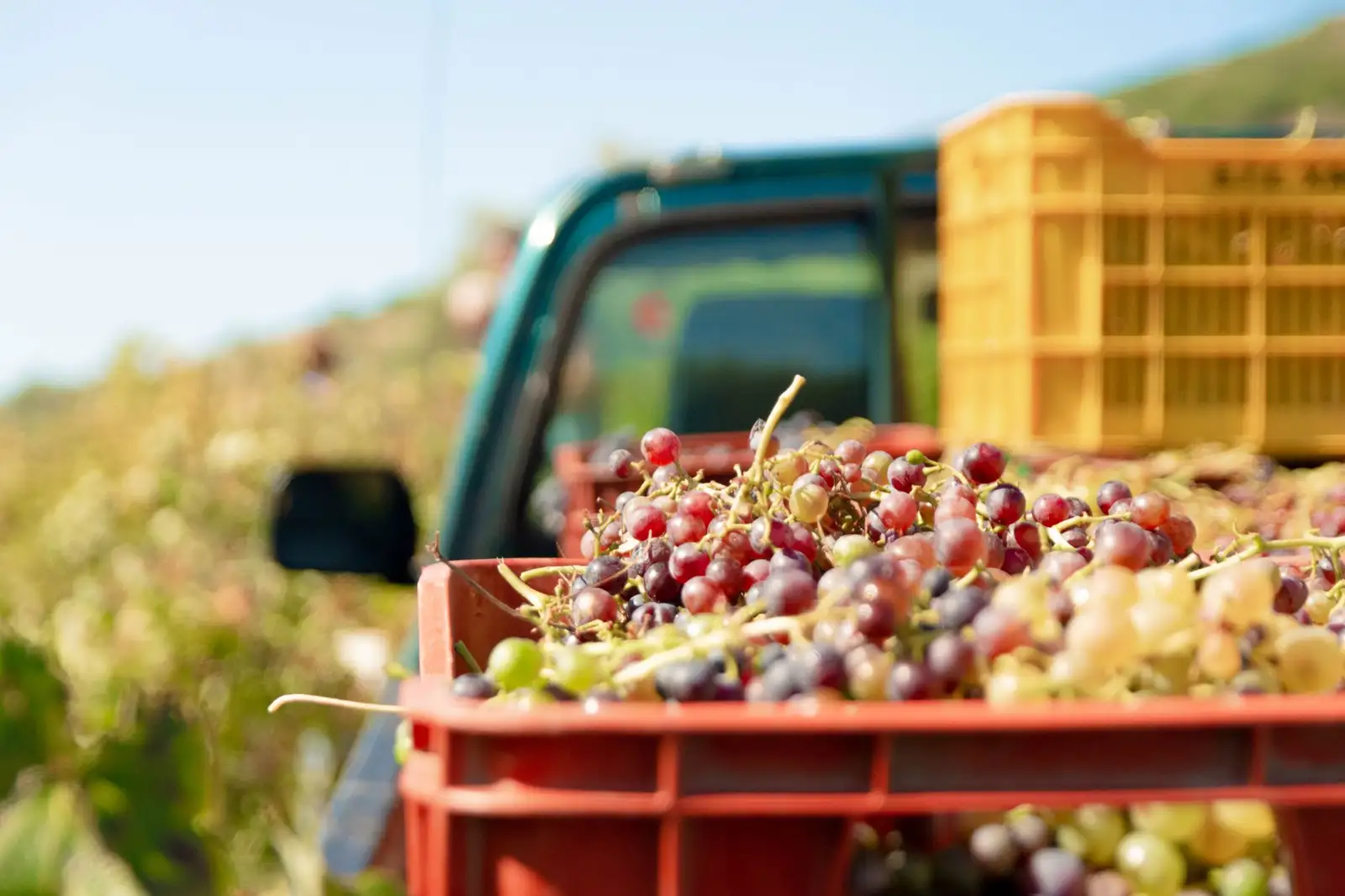

Early September, just after seven in the morning, and the fog hasn't burned off Lake Bolsena yet. A woman in her sixties is already three rows deep into a vineyard on the slopes above Montefiascone, snapping clusters of Trebbiano into a plastic crate she'll drag behind her all morning. Nobody told her this was the day to start. She just knew, the way people who've done this their whole lives know, that the sugar levels were right and the weather window was closing. If you show up expecting a scheduled event, harvest season will humble you a little. It runs on the grapes, not the calendar.
That's the whole problem with booking a wine harvest stay here: you're trying to plan around something that doesn't plan around you.
Key Takeaways
- Montefiascone sits on the Lazio side of a wine border that splits an identical growing area into two very different markets, and that border explains a lot about where you'll find small, family-run wineries willing to host visitors during harvest.
- The first two weeks of September carry the lowest overall risk if you want to see active picking, though flexible dates and a local contact you can text closer to departure beat any fixed calendar guess.
- Group size changes what a winery visit actually looks like. If you want lunch with the family rather than a timed tasting-room stop, a dozen people or fewer is the practical ceiling.
- Basing yourself in Montefiascone puts you inside Lake Bolsena wine country directly. Viterbo trades that proximity for train access and a wider range of restaurants.
- A guided small-group stay solves a scheduling problem DIY travelers tend to underestimate: harvest timing shifts year to year, and family wineries don't always answer email fast enough for you to plan around it from home.
Why Montefiascone, Specifically
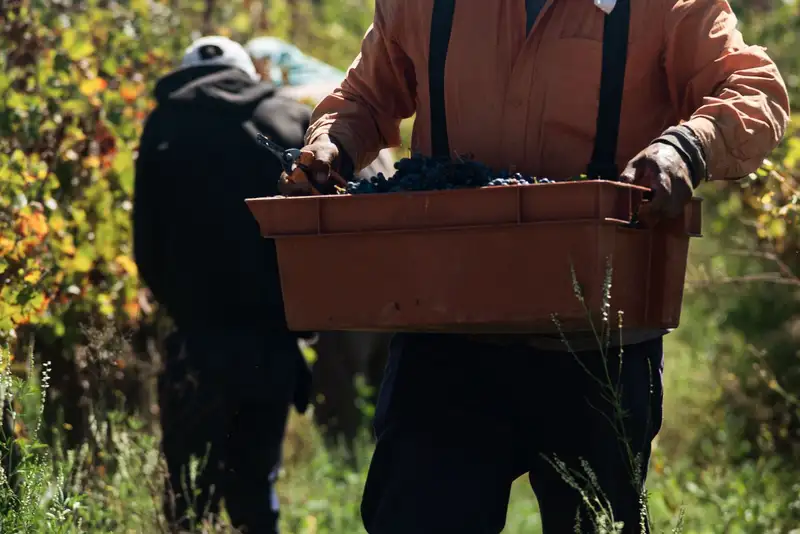
Montefiascone is best known for Est! Est!! Est!!! di Montefiascone, a white wine with a name that sounds like a joke until you learn the (probably apocryphal) legend behind it, and a hill town that overlooks Lake Bolsena from a striking position. But the reason it works well for a harvest stay has less to do with the wine's name and more to do with geography.
Drive about ten minutes northeast and you cross into what used to be, agriculturally speaking, the same growing area as Orvieto Classico country. The border between Lazio and Umbria cuts through vineyard land that shares soil, climate, and grape varieties. On one side, a bottle can carry the Orvieto designation. On the other, in a town like Castiglione in Teverina, it can't, and it can't be labeled "Umbrian" either, even though the vines might be across the sstreet from ones that qualify. The result is wine of real quality with almost no commercial market beyond the people who live there. Prices stay low because there's nowhere else for that wine to go.
For a traveler, that's actually good news. It means the small wineries clustered around Montefiascone and Castiglione in Teverina aren't set up for tour buses or wine-club shipments. They're set up for the people who show up in person, which is more or less what a small-group harvest stay is trying to do anyway.
The same volcanic soil that shapes the wine here (Lake Bolsena sits in a volcanic crater) also produces olive oil that's considered by most to be a level above a lot of what comes out of Tuscany. That's not a minor detail if you're planning meals around the trip. A lunch at a family winery in this area is rarely just wine. It's usually wine, olive oil pressed with an old cold-press method, and whatever the kitchen made that morning.
For background on the town itself and the wider province, the official Italian tourism page for Viterbo province is a decent starting point, and Treccani's entry on Montefiascone gives a more academic look at the town's history if you want context beyond the wine.
When to Go: The Booking Window Problem
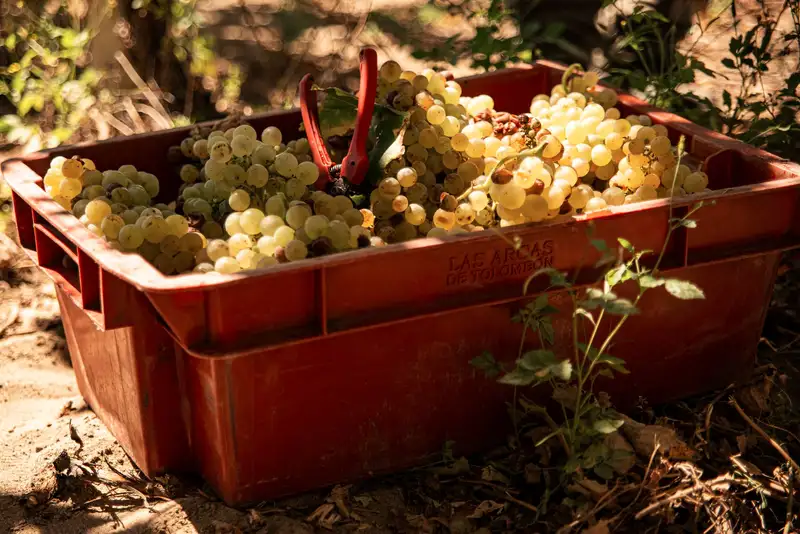
Here's the tension. You want to book far enough ahead to lock in a small guesthouse or a spot with a family winery that only takes a limited number of guests at a time. But harvest timing depends on that year's weather, and it can shift by two or three weeks in either direction. Book too early in the calendar and you might land before anything's happening. Book based on last year's dates and you might miss it entirely if the season runs fast.
If your travel dates are flexible, then consider holding a placeholder reservation and confirming with a local contact two to three weeks out, once that year's harvest timing is clearer. It's the smarter approach if you can manage it. A lot of the small guesthouses and agriturismi around Montefiascone will tell you straight, if you just ask, whether the picking has started in their area yet.
If your dates are fixed (a set vacation week, a flight you already booked), then the question becomes which fixed window gives you the best odds.
| Timing Window | What You'll Likely See | Weather | Crowd Level | Risk |
|---|---|---|---|---|
| Last week of August | Early picking in some vineyards, most still waiting | Hot, occasionally humid | Low | Might be too early in a slow-ripening year |
| First two weeks of September | Active harvest across most of the area | Warm days, cooler evenings | Low to moderate | Lowest overall risk |
| Third and fourth weeks of September | Late-stage picking, some vineyards already done | Mild, first real autumn feel | Moderate | Might be too late if the season ran fast |
| Early October | Harvest largely finished, pressing and early fermentation underway | Cool, sometimes rainy | Low | You'll miss active picking but may catch the cellar work |
None of these windows guarantees active picking on the exact day you arrive. What they do is shift the odds in your favor. The first two weeks of September combine the best chance of active harvest with weather that's more comfortable than late August, when Lazio can still run properly hot.
Is there a version of this trip where you show up in mid-October and still get something worthwhile? Sure. You'll usuallyjust be watching cellar work instead of vineyard work, which is its own thing, quieter, less physical, more about smell than sight. But the grapes don;t follow a schedule. If you had come in 2014, the harvest started for most in early October.
Where to Base Yourself
Montefiascone itself is an obvious choice if wine is the entire point of the trip. It's a real town, not a resort built around tourism, with a working relationship to the vineyards around it that goes back centuries. You're close to Lake Bolsena, close to the wineries, and close enough to Castiglione in Teverina that a short drive puts you into that low-priced, high-quality wine territory described above.
Viterbo, about fifteen minutes south by car, is the more practical hub if you don't have a rental. It has Trenitalia regional connections from Rome, a walkable historic center, and enough restaurants and services that you won't feel stranded on the nights you're not out at a winery. The tradeoff is distance. You're day-tripping into the vineyards rather than staying inside them.
Bolsena, on the lake itself, splits the difference. It's smaller than Viterbo but has more infrastructure than Montefiascone, and the lake views don't hurt.
If you're arriving without a car, then consider Viterbo as your base and treat the wineries as day trips, since public transit thins out fast once you leave the main towns. If you do have a car, Montefiascone or Bolsena puts you inside the growing area itself, which matters more than people expect once you're actually trying to time a winery visit around a family's picking schedule that morning.
What a Small-Group Winery Visit Actually Looks Like
This is worth being clear about, because a lot of "harvest experience" marketing oversells the theater of it.
At a family-run winery near Castiglione in Teverina or in the hills above Montefiascone, you're unlikely to get a polished tasting-room presentation with a printed menu of flights. What you're more likely to get is a walk through the rows with whoever's running the picking that day, a stop in the cellar (often cooler and mustier than you'd expect, and interesting for it), and then lunch with the family if the group is small enough that lunch with the family is a realistic thing to offer.
That last part depends almost entirely on group size. A winery that can comfortably host four or six people at their table can't necessarily host twenty. Once a group gets large, the visit tends to shift toward a scheduled tasting with a set pour list, run by whoever handles hospitality rather than the actual winemaker. Nothing wrong with that version. It's just a different experience, and it's worth knowing which one you're booking before you commit.
| Trip Structure | Who You'll Meet | Meal Format | Flexibility | Best For |
|---|---|---|---|---|
| DIY, solo or couple, calling ahead | Depends entirely on the winery, sometimes the owner directly | Often none, or a simple tasting | High. You set the schedule | Travelers comfortable with Italian phone calls and last-minute changes |
| DIY, small group (3-6) arranged independently | Family or small staff, if you've built a relationship | Sometimes lunch, if arranged in advance | Moderate | Confident planners with some Italian or a local contact |
| Guided small-group stay (8-14 people) | Winemaker or family member, usually the same one every visit | Lunch with the family is common | Lower, but the schedule is built around harvest timing already | Travelers who want the relationship-based visit without arranging it themselves |
| Large group tour (20+) | Hospitality staff, rarely the owner | Scheduled tasting, rarely a shared meal | Low | Travelers prioritizing efficiency over connection |
If getting to know the people behind the wine matters to you more than covering ground, then consider staying under a dozen travelers, whichever route you take to get there. The whole appeal of visiting a place like Castiglione in Teverina is that you can go home and tell a story about a specific person (the winemaker who chose that particular blend, the daughter running the olive mill) rather than a story about a tasting room.
There's a similar logic at work in how travel planners think about sequencing an entire region, not just a single winery stop. The piece on Tuscan-Umbrian corridor cultural progression makes the case that moving from Florence's grandeur into Tuscany and then into Umbria works better as a build than as a checklist, and the same reasoning applies at a smaller scale here. A harvest week near Montefiascone works better when it moves from big-name wines you already know toward the unfamiliar ones nobody's heard of, rather than the other way around.
The DIY Version, Honestly Assessed
None of this is impossible to arrange yourself. Italians in wine country are, in my experience, fairly used to travelers calling or emailing ahead to ask about visiting during harvest, and a lot of small producers welcome the interest, especially once you clarify you're not expecting a formal tour with signage and a gift shop.
The friction shows up in three places. First, timing: you're trying to schedule a visit around an event that a family winery might not fully commit to until a week or two beforehand, and that's a hard thing to coordinate from another country. Second, language: most small producers around Castiglione in Teverina don't have someone on hand who's confident in English, and a lot gets lost over email that wouldn't get lost in person with someone translating. Third, relationships: the wineries that offer the lunch-with-the-family version of this experience generally aren't doing it for strangers who show up cold. That access tends to come through someone who already has the relationship, whether that's a local contact, a guesthouse owner who knows the family, or an operator who's been visiting the same winery for years.
For example, Culture Discovery Vacations runs many week-long trips in this area, and has deep connections with some of these wineries. They do small group harvest weeks every year with wineries that would likely never see your email if you tried to go on your own.
If you're comfortable managing all three of those, the DIY version can be quite rewarding, and cheaper. If one of them (usually the timing, honestly) feels like more coordination than you want to take on while also planning flights, lodging, and everything else, that's a reasonable thing to hand off.
Making the Call
So where does that leave you?
If you're confident with some Italian, comfortable adjusting your schedule on short notice, and mainly want the freedom to structure each day yourself, book a base in Montefiascone or Bolsena, rent a car, and start calling small producers a few weeks before your trip to ask where they are in the picking. You'll get a real, unpolished version of the harvest, and you'll have earned it.
If you'd rather not manage the timing risk yourself, and the relationship-based version of a winery visit (the lunch, the cellar walk, the actual winemaker rather than hospitality staff) is the part you don't want to gamble on, that's where a small operator built around this idea becomes worth considering. Culture Discovery Vacations' cooking and harvest weeks out of Soriano nel Cimino, not far from Montefiascone, visits family-run wineries in this exact border region, including stops in Castiglione in Teverina for wine and olive oil experiences with the people who actually make them. It won't feel like the fully improvised version of the trip. But it removes the one variable, timing against the actual harvest, that's hardest to control from far away.
Either way works. The real question isn't whether Montefiascone is worth visiting during harvest season. It clearly is. The question is how much scheduling uncertainty you're willing to absorb yourself, and how much you'd rather hand to someone who's already tracking it.
Comments (0)
No comments yet. Be the first!