
I once watched a first-time visitor to Florence try to validate a ticket that didn't need validating, hold up a departing Frecciarossa by six seconds, and get a look from an Italian businessman that could curdle milk. Nobody yelled. Nobody explained. That's Italian train travel in a nutshell: the system runs on unwritten rules, and figuring them out mid-trip is harder than it should be.
This guide exists to fix that before you're standing on Platform 9 at Roma Termini wondering why your ticket says "posto non assegnato" and everyone around you seems to know something you don't.
Key Takeaways
- Trenitalia and Italo are the two high-speed operators, and choosing between them usually comes down to timing and price, not quality. Book both apps before assuming one is "the" option.
- Regional trains (Regionale) require a different mental model than high-speed trains: no assigned seats, no obligation to book ahead, and (still, in places) a validation step before boarding.
- If your itinerary touches three or more cities in one week, buying tickets a la carte usually beats a rail pass, contrary to what a lot of older guidebooks still claim.
- Strikes (scioperi) are common enough to plan around, not panic over. There's a predictable pattern to how they're announced and how trains still run around them.
- If you'd rather not manage any of this yourself, that's a legitimate choice, not a failure of nerve. More on that at the end.
The Two-Operator System: Trenitalia and Italo
Italy's high-speed rail network isn't run by a single company, and that trips people up who assume it works like Germany's Deutsche Bahn or France's SNCF.
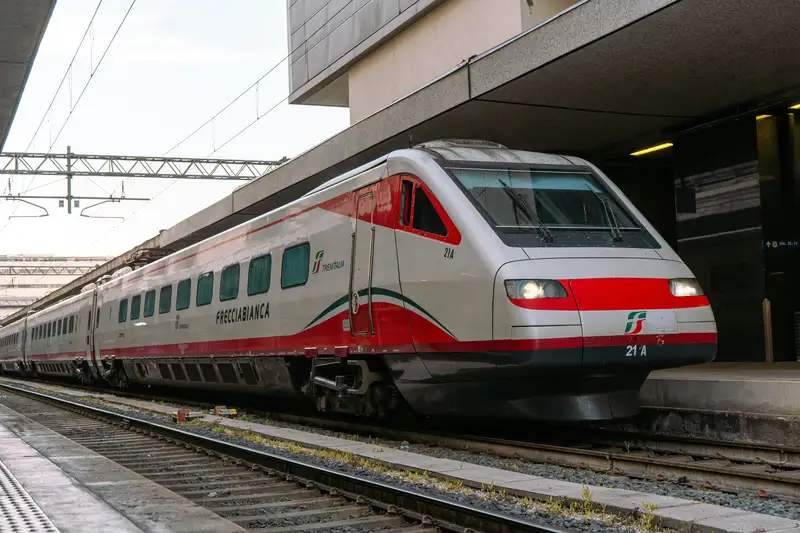
Trenitalia is the state operator. It runs everything from the sleek Frecciarossa (Red Arrow) trains between major cities to the slow Regionale trains that stop at every hill town with a station sign. It has the widest reach in the country by a large margin.
Italo is privately owned and only runs high-speed service on the busiest corridors: Milan to Rome, Rome to Naples, Venice to Florence, and a handful of others. It doesn't touch small towns at all. What it does offer is genuine competition on price and departure times along those specific routes.
Here's the practical implication: if you're going from Milan to Rome, you have two competing options and should check both before booking. If you're going from Orvieto to Cortona, you have exactly one option, and it's Trenitalia's regional network, full stop.
I'd check Trenitalia's official site and Italo's booking page side by side for any high-speed route. Prices fluctuate with demand the same way airline tickets do, and the cheaper option isn't always the same operator two weeks in a row.
Ticket Types: What You're Actually Buying
This is where most confusion starts, because "train ticket" in Italy can mean four or five very different products.
| Ticket Type | Seat Assigned? | Book Ahead? | Best For |
|---|---|---|---|
| Frecciarossa / Frecciargento (Trenitalia high-speed) | Yes | Yes, ideally days ahead for best price | City to city, long distances (Rome-Florence-Milan) |
| Italo (private high-speed) | Yes | Yes | Same corridors as above, price comparison |
| Intercity (IC) | Yes | Recommended | Mid-distance routes not served by Frecce |
| Regionale / Regionale Veloce | No | Not required | Short hops, small towns, day trips |
| InterCityNotte | Yes (bed or seat) | Yes | Overnight travel to Sicily or the far south |
The distinction between assigned and unassigned seating matters more than it sounds like it should. On a Frecciarossa, you sit in your ticketed seat, full stop, and if someone else is in it, you ask them to move (they will, without drama). On a Regionale train, seating is first come, first served, and there's no reserved anything. Show up five minutes before departure on a popular route in August and you might stand for forty minutes.
If your route is a straight shot between major cities, book the high-speed ticket in advance. If you're weaving through smaller towns, like the corridor from Florence down through Orvieto that a lot of Tuscany-Umbria itineraries follow, expect regional trains and buy tickets closer to travel, since prices don't really change with advance purchase the way high-speed fares do. That specific stretch, incidentally, gets covered in more depth in a piece on the Tuscan-Umbrian Corridor as a cultural sequence, which is worth reading if you're building an itinerary around that region rather than just booking transport.
The Validation Question
Here's something that still confuses experienced travelers: regional tickets bought at a station kiosk or ticket machine (not digitally) often need to be validated before boarding, stamped in one of the small green or white machines near the platform entrance. Miss this step and you can be fined on the train even with a valid, paid ticket, because the system has no record of when your journey started.
Digital tickets bought through the app, and all high-speed tickets with assigned seats, don't need this. The rule of thumb: if your ticket has a QR code and a specific train number and departure time printed on it, skip the machine. If it's a generic paper ticket without a specific time, validate it. When in doubt, validate it. The ten seconds it costs you is nothing compared to the fine.
Booking Platforms: App, Website, or Station?
Three ways to buy, and they're not equal.
The Trenitalia app is genuinely good at this point, better than it was five years ago. It shows real platform assignments, sends delay notifications, and lets you buy tickets literally minutes before departure for most routes. I'd install it before landing in Italy, not after.
The website works fine on a laptop but doesn't offer much the app doesn't, aside from a slightly easier interface for complex multi-leg searches.
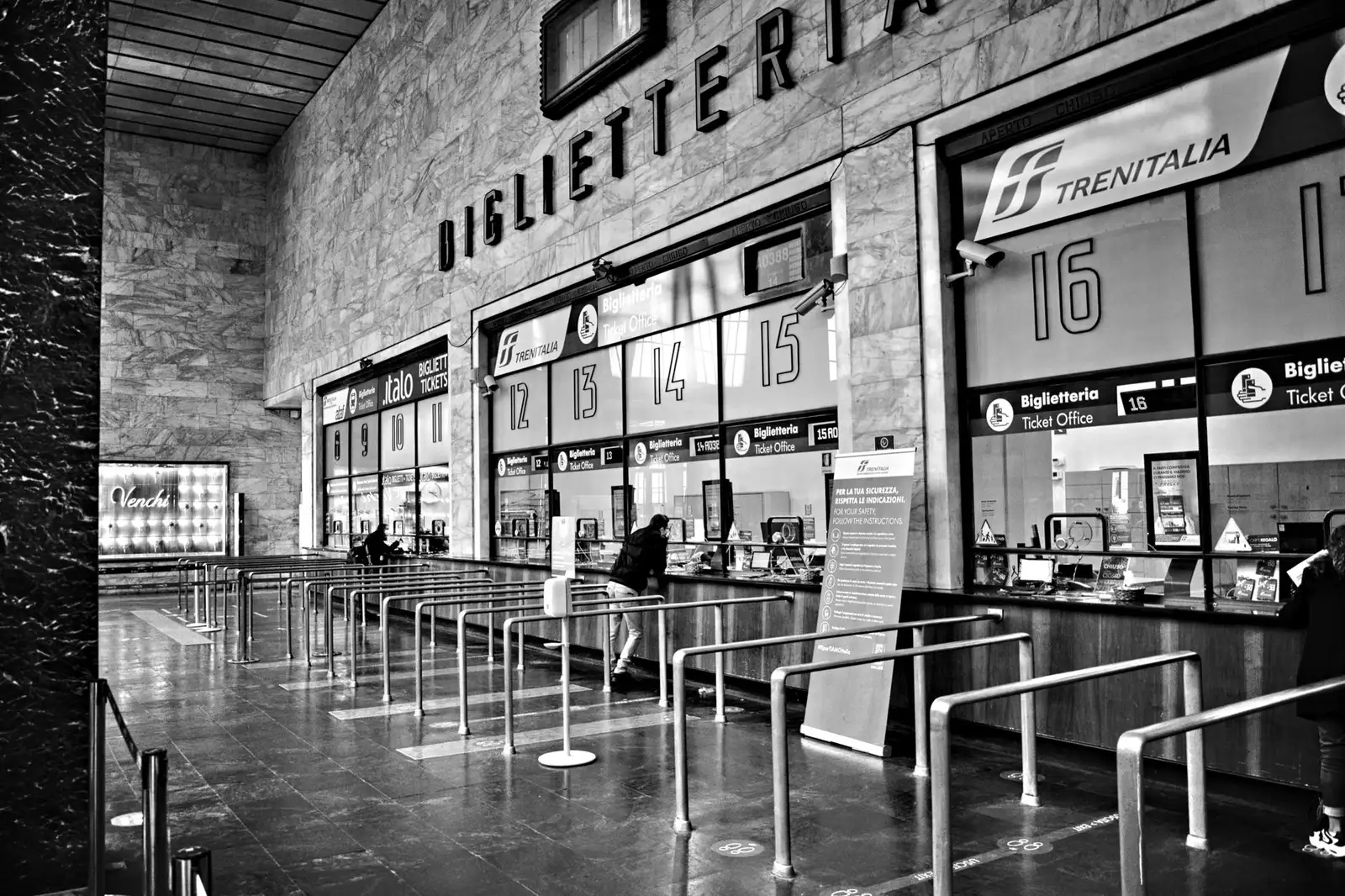
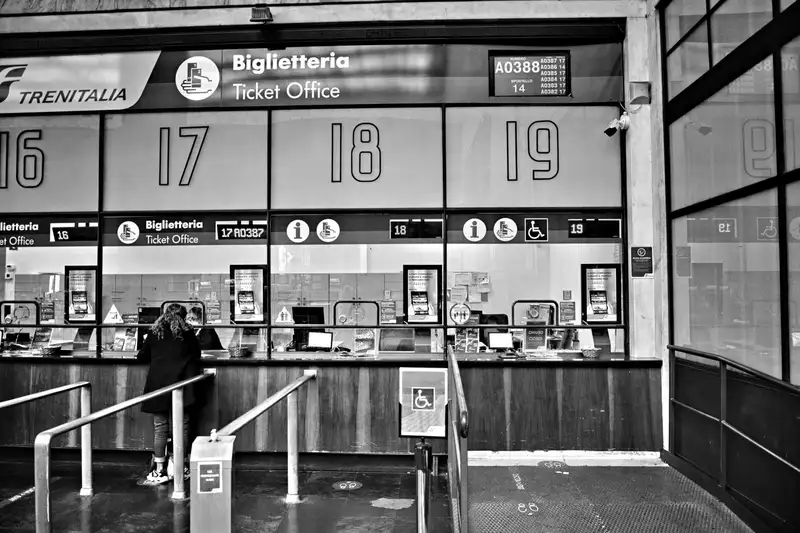
Station kiosks and ticket windows are your fallback, not your first choice. Lines at Roma Termini or Milano Centrale during peak hours can eat twenty minutes you didn't budget for. Use them for regional tickets bought same-day, or if you're the type who genuinely doesn't trust putting your travel plans on an app (totally fair, just slower).
One thing worth knowing: platform numbers for regional and even some high-speed trains often aren't posted until 15-20 minutes before departure. Don't panic if the departures board shows your train with no platform listed at 9:40 for a 10:00 departure. That's normal, not a warning sign.
Reading Routes and Timetables Without Losing Your Mind
Italian train timetables assume you already understand the geography, which is unhelpful if you don't.
A few things that help:
Direction matters more than the station name suggests. "Roma Termini" and "Roma Tiburtina" are both in Rome, but they're not interchangeable, and some high-speed trains only stop at one. Always confirm which station your train uses, especially in Rome, Milan, and Naples, where multiple major stations exist.
Change points aren't always obvious. Going from, say, Lecce in Puglia up to somewhere in central Italy will likely involve a change, sometimes two, and the app will show you this clearly enough, but manually reading a printed timetable without that context can leave you assuming a direct route exists when it doesn't. If you're headed toward Puglia's trulli country around Alberobello, know that the last stretch off the main line runs on a smaller regional connection, and it's worth budgeting extra time rather than a tight connection window. There's more detail on that specific area in a guide to the Valle d'Itria trulli trail, which covers the region past the point where the trains stop being convenient.
Cross-check with an independent source. I still like using Rome2Rio or Seat61's Italy guide to sanity-check a route before booking, especially for anything involving a transfer. Seat61 in particular is written by someone who's actually ridden most of these lines, which shows in the level of detail about platform quirks and connection timing that official sites don't bother mentioning.
Decision Matrix: Which Route Logic Applies?
| If your trip involves... | Then consider... |
|---|---|
| Two or three major cities only (Rome, Florence, Venice, Milan) | High-speed point to point, book in advance, no rail pass needed |
| A mix of major cities and small towns (Florence to Orvieto to Assisi) | Combine high-speed with regional legs, book regional closer to travel date |
| Islands or far south (Sicily, Sardinia) | Check ferry-plus-rail combinations or flights; overnight trains exist but aren't always faster |
| A single region explored slowly (Puglia, Val di Noto in Sicily) | Rent a car or hire a local driver for the last mile, since rail density drops fast outside main lines |
| Six or more cities in ten days | Price out a rail pass against a la carte tickets; passes rarely win anymore given how cheap advance high-speed fares can be |
That last point surprises people. Eurail and Trenitalia passes made more sense a decade ago, before dynamic pricing brought advance high-speed fares down to levels that undercut most pass math. Run the numbers for your specific itinerary rather than assuming the pass is the smart move by default.
Station Navigation: The Parts Nobody Explains
Big Italian stations (Roma Termini, Milano Centrale, Napoli Centrale) function like small cities. That's not an exaggeration so much as a warning about time budgeting.
Arrive at least 20 minutes before a high-speed departure if you're unfamiliar with the station, more if you're buying a ticket on arrival. Platforms can be a genuine ten-minute walk from the main entrance in the largest stations, and escalators break down more often than anyone would like to admit.
Departures boards use "Partenze," arrivals use "Arrivi." Obvious once you know it, mildly panic-inducing the first time you're scanning a wall of text trying to find your train among fifty others.
Luggage storage exists (look for "Deposito Bagagli") but has limited hours and can have long waits at major stations during peak season. If you're doing a day trip and need to drop a bag, this works, but don't count on it being instant.
On-Board Etiquette: The Unwritten Rules
Nobody hands you a manual for this, so here's the short version.
Quiet cars exist on most high-speed trains, and Italians actually respect them, more than you might expect given other cultural stereotypes about volume. If you're in one, keep your phone on silent and your conversation low. This isn't a suggestion so much as a mild social contract everyone else on the train assumes you've read.
Luggage racks at the ends of cars fill up fast. If yours doesn't fit, there's usually overhead space, but don't block the aisle with a suitcase while you sort it out. People are trying to get past you and Italians, in my experience, are less patient about slow-moving tourists in aisles than they are about almost anything else on a train.
Eating on board is completely normal, and the trolley service on Frecciarossa trains is genuinely decent for train food. What's less normal is unwrapping something pungent in a quiet car at 7am. Use judgment.
If someone's sitting in your assigned seat, the fix is simple: show them your ticket, they'll move, apologize on both sides, done. This happens constantly and nobody treats it as a conflict. It's paperwork, not an insult.
Handling Delays and Strikes
Delays happen, and Trenitalia's own on-time performance data (published periodically through ENIT, Italy's national tourism board, and referenced in various rail industry reporting) suggests high-speed lines run close to schedule more often than regional lines do, which tracks with most travelers' experience. Regional trains running behind by 10-15 minutes is common enough that I wouldn't build a tight connection around a regional leg if I could avoid it.
Strikes (scioperi) are a different animal, and they're more predictable than they sound. Italian rail strikes are typically announced days in advance, often target specific hours (commonly avoiding early morning and evening "guaranteed service" windows), and rarely shut down the entire network completely. The Trenitalia app will flag affected trains, and station boards post strike notices prominently once one's confirmed.
If you're traveling during a scheduled strike, then consider booking a train just before the guaranteed-service window closes or just after it reopens, since those slots tend to run close to normal. If your travel date coincides with a full-day strike and no guaranteed windows apply to your route, build in a backup day or a driving alternative rather than assuming the train will simply run late.
Regional Quirks Worth Knowing
A few specific things that don't come up in general guides but matter if you're heading to certain regions.
Sicily involves a ferry crossing for the train itself at Villa San Giovanni, where the whole train (yes, the actual train cars) rolls onto a boat to cross the Strait of Messina. It's slow, it's a little bizarre the first time, and it's also kind of wonderful if you're not in a hurry. If you're heading toward Agrigento to see the Valley of the Temples, factor in that the rail connection from Palermo or Catania takes longer than the map distance suggests, since it's regional service the rest of the way. There's a good breakdown of that area's transportation reality in a guide to the Valley of the Temples route.
The Amalfi Coast has no train at all along the coast itself. The nearest useful station is Salerno or Sorrento (via the separate Circumvesuviana line, which is its own slow, crowded, entirely different system from Trenitalia). If your itinerary includes that coastline, plan on buses or boats for the last stretch, not rail.
Southeastern Sicily, around Noto and Ragusa, has thin rail service and long gaps between trains. If you're building an itinerary around the Baroque towns there, a car makes more sense than trying to force the train schedule to cooperate; there's more on why that area rewards a slower pace generally in a piece on the Val di Noto Baroque route.
Making the Call: DIY or Let Someone Else Handle It
So where does this leave you?
If you're comfortable with apps, don't mind a little uncertainty about platform numbers, and enjoy the process of figuring out a system as you go, Italian trains are genuinely one of the better ways to see the country. Cheap, fast between major cities, and scenic in ways flying never is.
If you'd rather not spend planning hours on ticket types and validation rules, or if your itinerary threads through smaller towns where the regional network gets thin and confusing, that's a fair reason to look at guided options for those who prefer support. Culture Discovery Vacations, for instance, builds its Italy trips around staying in one town and taking excursions out from there, which sidesteps a lot of the multi-city train logistics entirely (worth a look at their Italy programs if that structure appeals to you more than solo navigation).
Either way works. The trains themselves are good, that part isn't in question. What's in question is how much of the planning you want to do yourself, and there's no wrong answer to that, just a clearer one once you know what the system actually asks of you.
Comments (0)
No comments yet. Be the first!