
Key Takeaways
- Tarquinia gets the brochure treatment, but Cerveteri, Norchia, Sovana, and Vulci hold tombs just as worth seeing, and most travelers never make it to them because the logistics feel opaque.
- Opening hours shift by season, Mondays are frequently dark at smaller sites, and combined tickets (Tarquinia plus Cerveteri) save money if you're doing both within a set window.
- A car changes what's possible. Norchia has no public transport option at all; Cerveteri and Tarquinia are reachable by train from Rome with a short walk or taxi at the end.
- You don't need a guide to understand what you're looking at if you learn three tomb typologies and a handful of recurring objects. That's most of the interpretive work done.
- If you have one day, pick one necropolis and go deep. If you have two or three, sequence them so painted chamber tombs come before the bare stone facades of the Tuscia hinterland. The order changes what you notice.
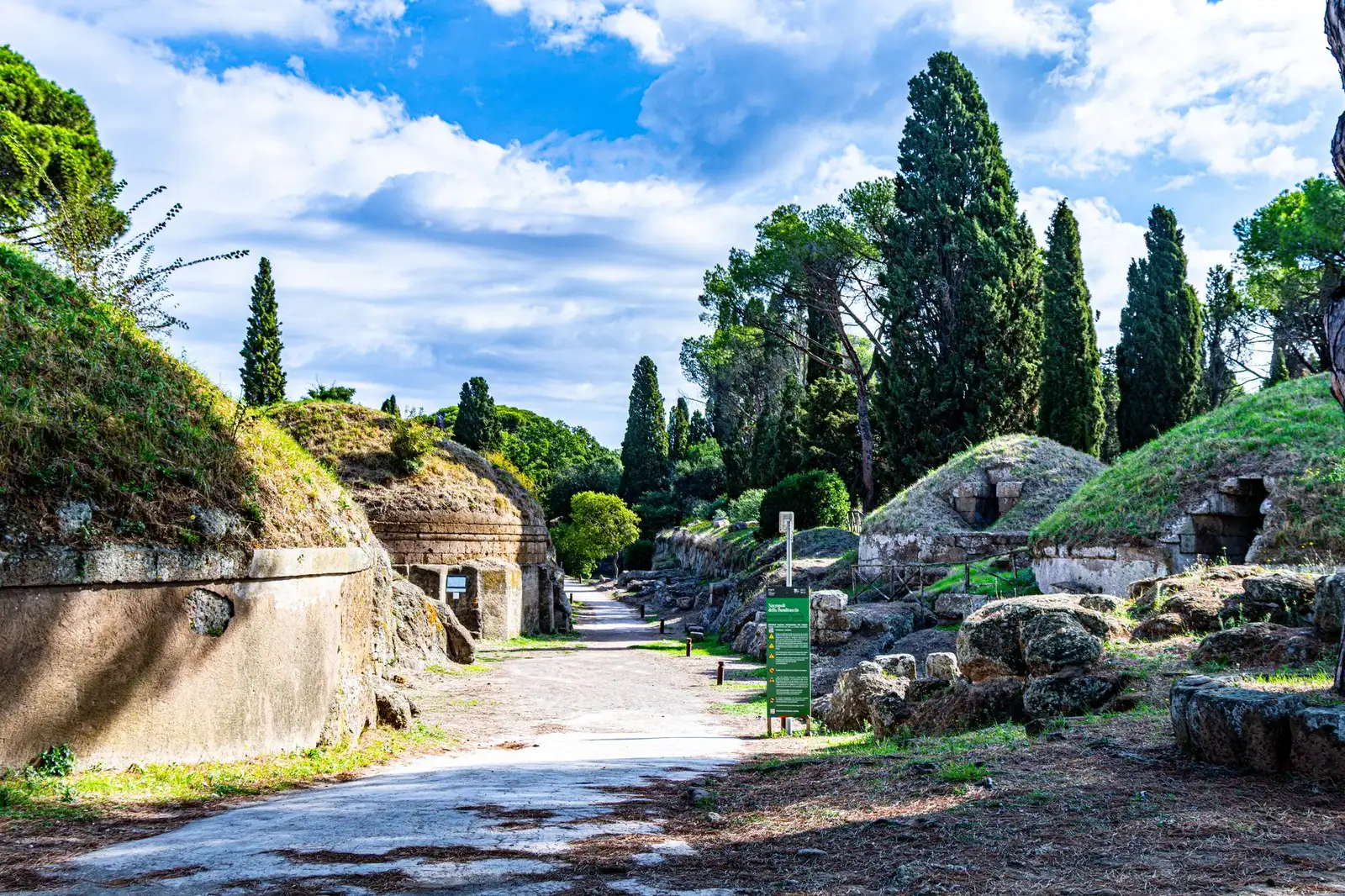
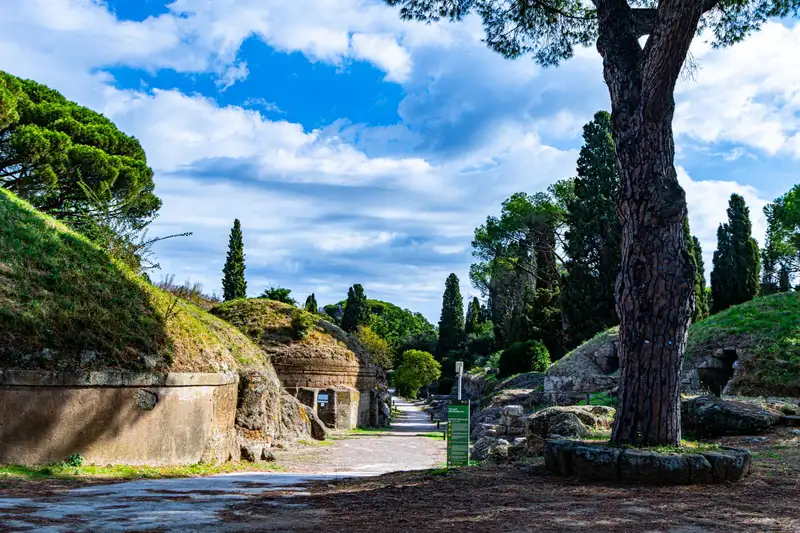
There's a specific quiet at Cerveteri's Banditaccia necropolis around nine in the morning, before the first tour bus pulls in. The tumuli (grass-covered mounds, some the size of small houses) sit along streets cut into the tufa rock, and the whole place reads less like a cemetery and more like a city that happened to be built for the dead instead of the living. Which, as it turns out, is more or less the point. Walk between two of the larger mounds and you're standing on a street plan the Etruscans laid out around the 7th century BCE, with doorways and thresholds and what were clearly meant to be neighborhoods.
Most visitors never see this. They go to Tarquinia, look at the painted tombs through the glass (the originals are sealed to protect the frescoes, and you view them via lowered viewing windows or screens depending on the tomb), and call it done. Tarquinia deserves the visit. But treating it as the whole of Etruscan funerary architecture is a bit like visiting Rome and skipping everything that isn't the Colosseum.
This guide is about the logistics that keep people from going further, and about giving you enough of an interpretive framework that you don't need someone standing next to you explaining what a dado tomb is.
Why Go Beyond Tarquinia
Tarquinia and Cerveteri together make up a single UNESCO World Heritage designation, recognized jointly for their necropolises, and that pairing alone tells you something: these aren't competing sites, they're complementary ones. UNESCO's listing for the Etruscan Necropolises of Cerveteri and Tarquinia describes them as the most complete surviving evidence of Etruscan civilization, and the two sites show genuinely different things. Tarquinia is about painted interiors: banquet scenes, dancers, animals, color that has survived more than two thousand years underground. Cerveteri is about architecture and urban planning at a scale that's hard to grasp until you're walking its streets.
Then there's the third layer, the sites almost nobody outside dedicated Etruscologists visits: Norchia, Sovana, and the rock-cut tomb facades scattered through the Tuscia area of northern Lazio. These are carved directly into cliff faces, some resembling small temple fronts, and they sit in landscapes with almost no visitor infrastructure. No ticket booth, sometimes no signage beyond a faded panel. If Tarquinia and Cerveteri are the museum experience, Norchia is closer to discovery.
Should you go? That depends entirely on how much time and flexibility you've got, which brings us to the part nobody writes about clearly: the actual mechanics of getting to and through these places.
The Logistics Nobody Tells You About
Opening Hours and Seasonal Variation
Tarquinia and Cerveteri operate on fairly predictable museum-and-site hours, typically open Tuesday through Sunday with reduced winter hours and a last-entry time well before closing (plan to arrive at least ninety minutes before posted closing if you want to see everything without being rushed out). Mondays are the default closure day across most Italian state-run archaeological sites, and that includes these two. If your itinerary has you arriving on a Monday, you'll want a backup plan rather than a wasted morning.
Smaller sites like Norchia operate differently, sometimes with no fixed hours at all because they're open-access archaeological areas rather than ticketed museums. Sovana's tombs, part of the broader Città del Tufo archaeological park, have more structure, but hours still shrink considerably in winter months (November through March), and some access paths close after heavy rain because the tufa paths get slippery.
If you're planning a winter visit, call ahead or check the municipal tourism office for the town nearest the site. Don't assume the hours posted online from two seasons ago are current. I've seen them change mid-year more than once.
Tickets: What's Combined and What Isn't
Tarquinia and Cerveteri sell a combined ticket that covers the necropolis and the associated museum at each site, valid for a window of several days, which makes sense if you're treating this as a two-site day or a loose two-day itinerary. Buy it at either location; it works at both.
Norchia and the rock-cut tomb sites in the Tuscia hinterland don't charge admission at all, because they fall outside the ticketed museum system. Sovana's necropolis does charge a modest entry fee through the local archaeological park authority.
If you don't want to DIY this part at all, this is one of the moments where a local sets you straight in five minutes what would've taken an hour of search results to piece together.
Getting There: Train, Car, or Neither
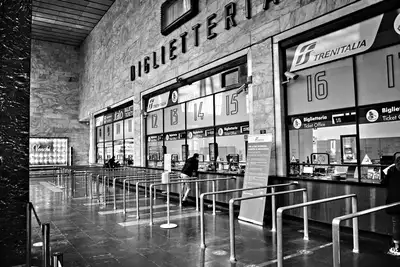
Tarquinia and Cerveteri are both reachable by regional train from Rome (Roma Termini or Roma San Pietro), with the Tarquinia station a few kilometers from the necropolis itself, requiring a short taxi ride or a somewhat long walk. Trenitalia's regional line schedules run frequently enough that this isn't a planning headache, and the train is honestly the more relaxing option if you're not continuing on to the more remote sites afterward.
Cerveteri's station, similarly, sits a few kilometers from Banditaccia, with local buses timed loosely around train arrivals (loosely being the operative word, so build in slack).
Norchia is a different matter entirely. There's no train station nearby, no regular bus service, and the access road itself can be rough. You need a car, or you need to arrange a driver. If you don't have one, Norchia simply isn't on the table, and that's worth knowing before you build a day around it.
Sovana sits closer to viable public transport corridors, but even there, a car dramatically expands what else you can see that day: the town of Sovana itself, the nearby Pitigliano tufa towns, and the surrounding countryside.
A Site-by-Site Decision Matrix
If you're trying to decide where to spend limited time, this is roughly how the sites stack up against each other.
| Site | Access Without a Car | Time Needed | What You're Really There For | Crowd Level |
|---|---|---|---|---|
| Tarquinia | Train + short walk/taxi | 2-3 hours | Painted chamber tombs, interior color | Moderate to high |
| Cerveteri (Banditaccia) | Train + bus or taxi | 2-3 hours | Tumuli, street-plan urban layout | Moderate |
| Norchia | Not viable | 1.5-2 hours | Rock-cut facade tombs, near-total solitude | Very low |
| Sovana | Limited, car recommended | 2 hours | Facade tombs plus a livable medieval town | Low |
| Vulci | Car required | 2-3 hours (site is large) | Bridge, tombs, and a river gorge setting | Low |
Read this table as a set of filters, not a ranking. If you have one day and no car, Tarquinia and Cerveteri are your real options, and you can do both if you start early. If you have a car and want the quieter, more atmospheric side of Etruscan funerary architecture, Norchia or Sovana earns the detour. If you're combining this with a stay in the Alto Lazio hills (the Cimini area around Viterbo and Soriano nel Cimino, for instance), Norchia and Sovana sit close enough to fold into a longer loop that might also take in the dying city of Civita di Bagnoregio, which was itself founded by the Etruscans well before the medieval town took shape on top of it.
Reading the Tombs: A Framework That Doesn't Require a Guide
Here's the part that actually changes the visit: you don't need someone narrating next to you if you understand three or four recurring forms. Etruscan tomb architecture isn't random. It follows typologies that repeat across sites, once you know to look for them.
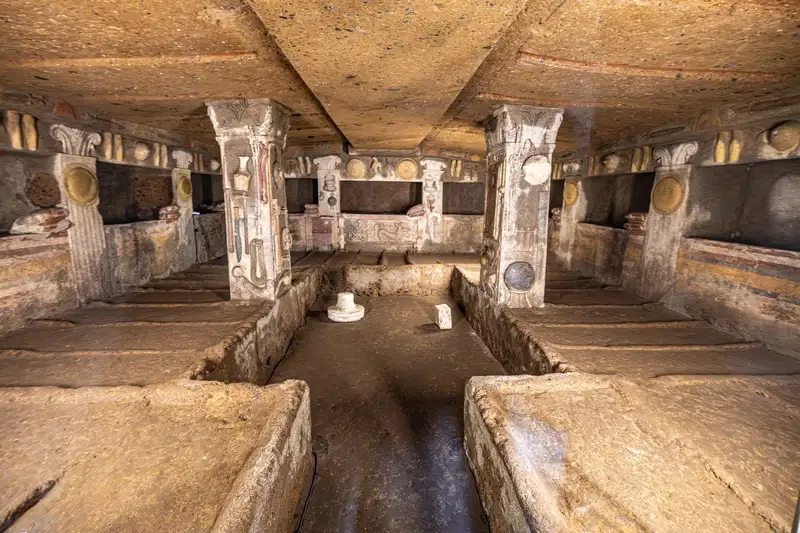
Tumulus tombs are the mound-covered chamber tombs you see dominating Cerveteri. A circular drum of cut stone forms the base, earth is piled on top, and the chamber inside often mimics a house interior, with carved beams, doorframes, and even furniture shapes cut directly into the rock. This matters because it tells you something about Etruscan belief: the afterlife wasn't an abstraction, it was a continuation of domestic life, complete with the architecture of home.
Chamber tombs with painted interiors are what Tarquinia is known for. These are smaller, rock-cut rooms beneath the surface (no external mound), decorated with frescoes showing banquets, dancing, hunting, and sometimes underworld imagery in the later periods. The paintings shift noticeably over time: earlier tombs (7th-6th century BCE) lean toward lively, almost celebratory scenes, while later tombs (4th-3rd century BCE) introduce darker figures and more explicit underworld iconography. If you notice that shift as you move between tombs, you're reading real historical change, not just decoration.
Facade tombs, the kind you find at Norchia and Sovana, are a different approach again: instead of a mound or an underground chamber, the tomb is carved directly into a cliff face, with an architectural front resembling a small temple, complete with columns or pilasters cut from the living rock. These are later in the Etruscan period generally, and they show clear influence from Hellenistic architectural styles moving through the Mediterranean.
Once you can name these three types on sight, most of what you're seeing at any given necropolis sorts itself into a category, and the question becomes "why this type, here, now" rather than "what am I even looking at."
What the Objects Inside Tell You
The tombs themselves are half the story. The other half is what was (or wasn't) found inside, now sitting in the museums at Tarquinia and Cerveteri rather than in the tombs themselves.
Sarcophagi with reclining banquet couples on the lid, the most famous being the Sarcophagus of the Spouses now in Rome's Villa Giulia, tell you about how the Etruscans wanted to be remembered: at ease, together, mid-gesture, often holding a cup or reaching toward a partner. Compare that to Roman funerary sculpture from the same general era and the contrast is immediate. Roman tombs tend toward formal, upright portraiture. Etruscan ones are relaxed, social, almost domestic.
Grave goods, when you see them displayed in the museum cases, follow a rough logic too: bronze mirrors and jewelry in tombs identified as women's, weapons and armor in men's, imported Greek pottery (particularly Attic black-figure and red-figure ware) signaling trade wealth and status. The presence of Greek ceramics in an Etruscan tomb isn't incidental. It's a marker of how wide the trade networks ran, and how much the Etruscans valued goods that came from outside their own territory as status objects. Britannica's overview of Etruscan civilization is a useful primer if you want the broader historical context before you go, rather than trying to absorb it all standing in front of a glass case.
Building Your Day: Sequencing and Time Management
Order matters more than people assume. If you're doing Tarquinia and Cerveteri in the same trip (not necessarily the same day, though it's possible if you start at 8am), go to Cerveteri first. Its tumuli give you the big architectural picture, the sense of scale and urban logic, before you move to Tarquinia's more intimate, detail-heavy painted chambers. Doing it the other way around tends to make Cerveteri feel anticlimactic, since the color and narrative detail of Tarquinia's frescoes is the more immediately impressive experience, and nothing after it quite lands the same way.
For Norchia and Sovana, go in the morning. Not because of crowds (there usually aren't any) but because the light on tufa rock facades is genuinely better early, and because both sites involve some walking over uneven ground that gets uncomfortable in afternoon heat during summer months.
A rough one-day framework, assuming you have a car:
Morning: Cerveteri (2-3 hours), including the museum if you have the combined ticket. Midday: drive to Tarquinia, lunch in the old town rather than at a site cafeteria (the walled town itself is worth an hour on its own). Afternoon: Tarquinia necropolis and museum (2-3 hours).
That's a full, reasonable day. Adding Norchia or Sovana to the same day isn't realistic unless you're willing to skip depth at the first two sites, and I don't think that's a good trade. Better to treat the Tuscia hinterland sites as their own day, ideally paired with a night somewhere like Viterbo or the Cimini hills, where you're also within range of smaller food and wine experiences that have nothing to do with tourism infrastructure, the kind of evening where you end up at a wine cellar gathering in a town like Canepina rather than a tasting room built for tour groups.
When You'd Rather Not Plan This Yourself
If you've read this far and the ticket windows, train transfers, and tomb typologies sound less like an afternoon of interesting research and more like a logistics project you'd rather not run, that's a fair reaction. Some of this, particularly the Norchia and Sovana access question, genuinely benefits from someone who already knows the roads and the seasonal quirks of a given site.
This is where a smaller, regionally-based operator can do work that a generic tour company can't. I've seen the difference up close over twenty years of running trips through Lazio and Tuscany: the big operators tend to stop at whichever sites have parking lots and gift shops, while the smaller, locally-rooted ones will take you to the family winery a few miles past the famous one, or arrange the kind of access to a rural necropolis that doesn't show up on a map app. Culture Discovery Vacations is one example of this kind of operator, built around exactly the premise that the detour is usually the better stop, not the compromise.
Whether you go that route or stick with a rental car and this guide in your pocket, the real decision point is simple: if your time is limited to a single day and you're without a car, Tarquinia and Cerveteri will give you the fullest, most efficient picture of Etruscan funerary architecture available by train. If you've got a car and an extra day, Norchia and Sovana (and, further afield, Vulci) reward the effort with something closer to discovery than museum-going, and honestly, that's the whole point of going to the lesser-known sites in the first place.
Comments (0)
No comments yet. Be the first!