
Key Takeaways
- Vallerano and its Monti Cimini neighbors (Soriano nel Cimino chief among them) run different chestnut festivals with different personalities. Picking the right one matters more than picking "a chestnut festival in Lazio" in general.
- Timing inside October matters almost as much as which town you choose. Early weekends and late weekends in the same month can mean very different crowd levels and roasting activity.
- Vallerano's chestnut, the Marrone di Vallerano, carries a European geographical indication, which is a reasonable signal that this isn't a generic autumn fair dressed up for tourists.
- If you want the festival plus hands-on cooking built around the harvest, the towns differ in how much of that infrastructure exists for visitors versus locals only.
- DIY works fine here if you're comfortable with regional trains and a little uncertainty about exact festival dates each year. If that sounds like more coordination than you want, there's a reasonable case for handing it off.
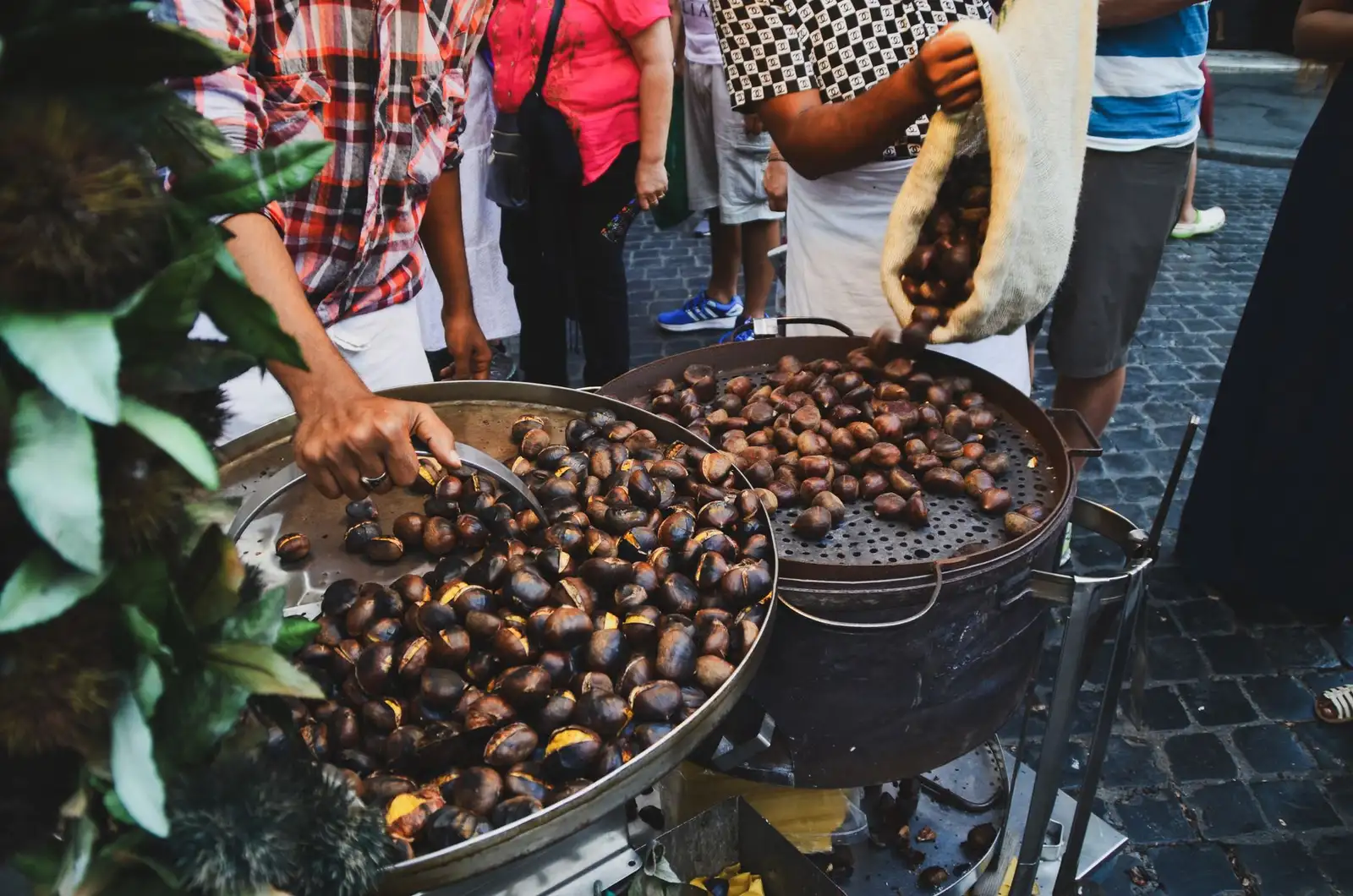
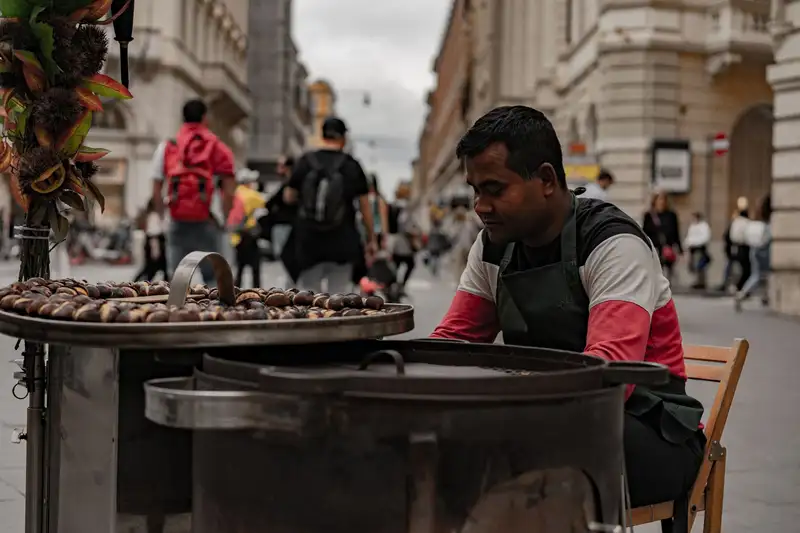
The first time I stood in Vallerano's piazza during chestnut season, the smell got me before anything else did: wood smoke, roasting nuts, something faintly sweet underneath it all. Vendors were turning perforated pans over open flames, the kind you see all over central Italy in October but rarely with this much unhurried confidence. Nobody was rushing. That's the tell that you're in a town where this is routine, not a performance staged for a tour bus schedule.
Vallerano sits tucked into the Monti Cimini—volcanic hills in Viterbo province—and it's far from the only town around here that's built its whole autumn identity around chestnuts. Small enough to walk end to end in an afternoon, and the chestnut here isn't just a seasonal snack. The Marrone di Vallerano holds a Protected Geographical Indication designation from the EU, which means the variety and the growing area are defined and protected the way Parmigiano Reggiano or Chianti Classico are protected. That's a meaningful difference from towns where "chestnut festival" is more marketing than agriculture.
But Vallerano isn't the only chestnut town in this stretch of hills, and figuring out which one deserves your October matters more than most guides let on.
Vallerano or Soriano nel Cimino: Two Towns, Two Different Weeks
Soriano nel Cimino sits close by, in the same Cimini growing region, and runs its own well-known chestnut event: the Medieval Chestnut Festival, which has been a tradition there for over 50 years. It's built around the first two weekends of October, and the town does something Vallerano doesn't attempt at the same scale. It transforms into a Medieval setting for the month leading up to the festival, with four neighborhoods (called Contrade) each competing with their own costumes, colors, and performances. Flag throwers, evening fire shows, taverne set up specifically for festival weeks. It's theater as much as harvest celebration, and it draws people from well outside the region because of that.
Vallerano's event is quieter and more locally scaled. There's less pageantry, fewer performers, and a stronger sense that you're watching a town do what it does every October rather than watching a production. Neither approach is better. They're just different, and the mistake I see people make is assuming one chestnut festival in the Cimini Hills is basically interchangeable with another.
| Factor | Vallerano | Soriano nel Cimino |
|---|---|---|
| Scale | Small, local | Larger, regional draw |
| Festival style | Market and harvest focus | Medieval pageantry, Contrade competitions |
| Crowd level | Lower | Higher, especially first two weekends of October |
| Chestnut designation | Marrone di Vallerano (PGI) | Chestnut, not a designated variety |
| Cooking class infrastructure for visitors | Limited, mostly local | More developed, tied into regional food tourism |
| Best for | Travelers who want a low-key, food-first afternoon | Travelers who want spectacle plus food |
If you want an afternoon that feels like you wandered into a working harvest town rather than an event built for outsiders, Vallerano is the better call. If you want costumes, competition, and a festival that fills a whole town for two weekends running, Soriano is the one to plan around.
When the Nuts Are Actually Ready: A Timing Framework
Chestnut season in the Cimini Hills runs through October in most years, but "October" covers a lot of ground. Early October and late October in this region can feel like different seasons entirely, both in terms of weather and in terms of what's actually happening in the groves and at the festival stalls.
I'd break the month into rough windows rather than trying to nail a specific weekend, because harvest timing shifts year to year depending on rainfall and temperature earlier in the season.
| Timing Window | What You'll Likely See | Weather | Crowd Level |
|---|---|---|---|
| First weekend of October | Festival opening, active roasting, groves still being worked | Mild days, cool evenings | Moderate, building |
| Second weekend of October | Peak festival activity in Soriano specifically | Cool, first real autumn chill | High in Soriano, moderate in Vallerano |
| Third weekend of October | Harvest winding down, fewer stalls | Cooler, occasional rain | Lower |
| Late October | Mostly finished, transitioning toward olive season | Cold, wet more often | Low |
If the spectacle matters to you, then consider the second weekend of October and plan around Soriano nel Cimino specifically, since that's when its festival tends to hit full activity. If you'd rather have a quieter town, room to actually talk to a vendor without a line behind you, and don't mind slightly less roasting activity, then consider the first weekend and Vallerano.
Neither of these is a guarantee. Harvest years run early or late depending on the weather that September, and nobody can promise you peak roasting on a specific Saturday booked six months out. What this framework does is stack the odds in your favor rather than leaving the date to chance.
Getting There and Basing Yourself
Viterbo functions as the practical hub for this whole area. It has regional train connections from Rome (Trenitalia runs the route, and the trip takes roughly an hour and a half depending on which service you catch), a walkable historic center, and enough infrastructure that you're not stranded without a rental car. The Italian National Tourist Board's page for Viterbo is a reasonable starting point if you want a sense of what else the province offers beyond the two chestnut towns.
Neither Vallerano nor Soriano nel Cimino sits directly on a rail line, though. You're looking at a short drive or a local bus connection from Viterbo into the hills either way, and this is where a rental car genuinely earns its cost. Public transit between these small hill towns exists, but it runs on a schedule built for residents, not visitors chasing a festival weekend.
Vallerano is small enough that a day trip from Viterbo covers it comfortably. You don't need to stay overnight to get the experience. Soriano nel Cimino, especially if you're there for one of the two festival weekends, rewards staying closer, since the town fills with foot traffic and evening performances that run later than a day-trip schedule accommodates well.
DIY vs Guided: What You're Actually Choosing Between
This is where the honest tradeoff lives. A chestnut festival day trip is not complicated. You drive or bus into a small town, you eat roasted chestnuts, maybe some chestnut-based pasta or dessert, and you leave. That part doesn't need help.
What gets harder is the layer underneath it: which weekend actually has the harvest in full swing that particular year, how to get a seat at a hands-on cooking class using the ingredients you just watched get roasted, and how to string together a longer stay in the region without wasting a day on transit gaps.
| Factor | DIY | Guided / Local Access |
|---|---|---|
| Cost | Lower | Higher |
| Flexibility on exact dates | Full control | Depends on program schedule |
| Access to working groves and mills | Limited without a local contact | Built into the itinerary |
| Cooking class access | Requires advance research, sometimes limited to locals | Usually included |
| Risk of missing peak timing | Higher, you're guessing | Lower, operators track the season |
| Effort required to plan | High | Low |
If you're comfortable reading a regional transit schedule, calling a small guesthouse to ask whether the harvest has started yet, and building in some flexibility for a rainy day, the DIY version works fine and costs a lot less. I've done it that way myself, more than once, and it's not a hard region to figure out on your own.
Combining the Festival With the Table
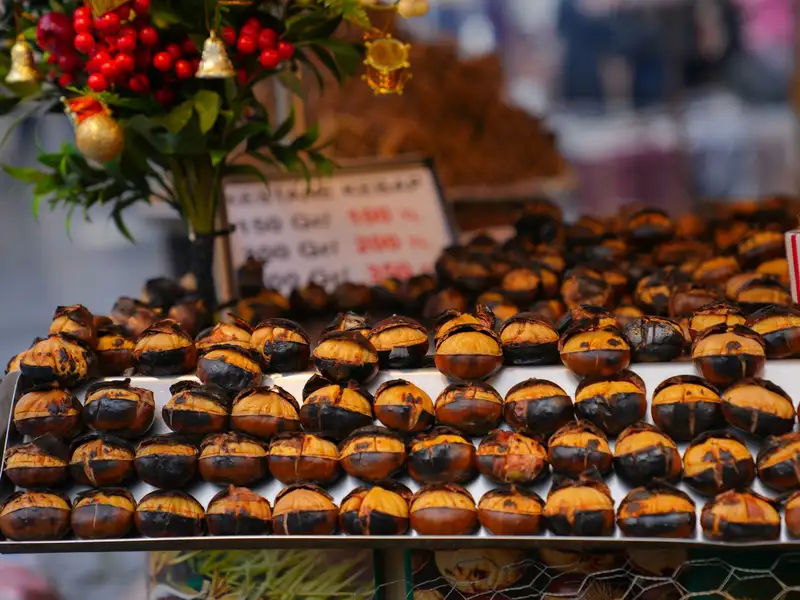
Look, you can't really talk about chestnuts in the Cimini without talking about the cooking, because they're not actually separate things. The same harvest that fills the roasting pans in Vallerano's piazza is what shows up as flour in chestnut cake, or folded into pasta dishes at the small trattorie around Soriano. There are cooking classes in October built around these chestnuts, and they're the real deal—not some tourist version cooked up for the season.
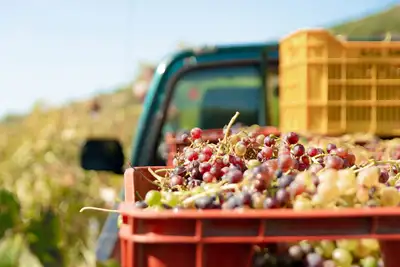
Overlap happens at the table too: wine and chestnuts peak around the same time, since the grapes are coming in from the terraces below these hills right when the nuts are ready. If you're already planning a longer central Italy trip, the same logic that works for sequencing Florence, Tuscany, and Umbria (which this guide covers) works here too. The Cimini Hills sit close enough to slot in as a quieter ending—less crowded than Orvieto or Florence in October, but moving to the same seasonal beat.
The sequencing question matters more than people give it credit for, honestly. A trip that hits three or four towns without any logic behind the order tends to feel scattered no matter how good each individual stop is. The same reasoning that governs pacing a week through Andalusia (build in a rhythm of activity and rest, don't front-load novelty) holds up here too. A chestnut festival day, followed by a quieter cooking-focused day, beats stacking festival on festival until the whole week blurs together.
The Final Decision
So which town, which weekend, and how much of it do you want to plan yourself?
If spectacle matters to you, and you're fine with a bigger crowd, pick Soriano nel Cimino during the first or second weekend of October when the Medieval Chestnut Festival kicks into high gear. If you'd rather have a quieter afternoon, more direct time with the actual harvest, and fewer production layers, go with Vallerano in that first weekend before things pick up.
If your dates are flexible and you can manage it, hold a placeholder and confirm with a local guesthouse or agriturismo two to three weeks out once that year's harvest timing is clearer. A lot of small operators in the area will tell you straight, if you just ask, whether the picking has actually started.
And if keeping track of all this—harvest timing, which cooking class is worth the drive, how to connect between hill towns with no direct trains—sounds like more than you want to handle on top of everything else you're juggling, that's fair. Just hand it off. Culture Discovery Vacations runs an eight-day week in Soriano nel Cimino timed to the Medieval Chestnut Festival and the harvest season, built around small groups living alongside locals and hands-on cooking classes using the same chestnuts you'd otherwise be guessing about from a roadside stand. It's not the only way to do this trip. But it removes most of the guessing, and for a harvest season that shifts every year depending on the weather, that's worth something.
Either way you go, the region rewards showing up in October rather than trying to squeeze it in during a different month and hoping for the best. Chestnuts don't wait around, and neither does the season built around them.
Comments (0)
No comments yet. Be the first!