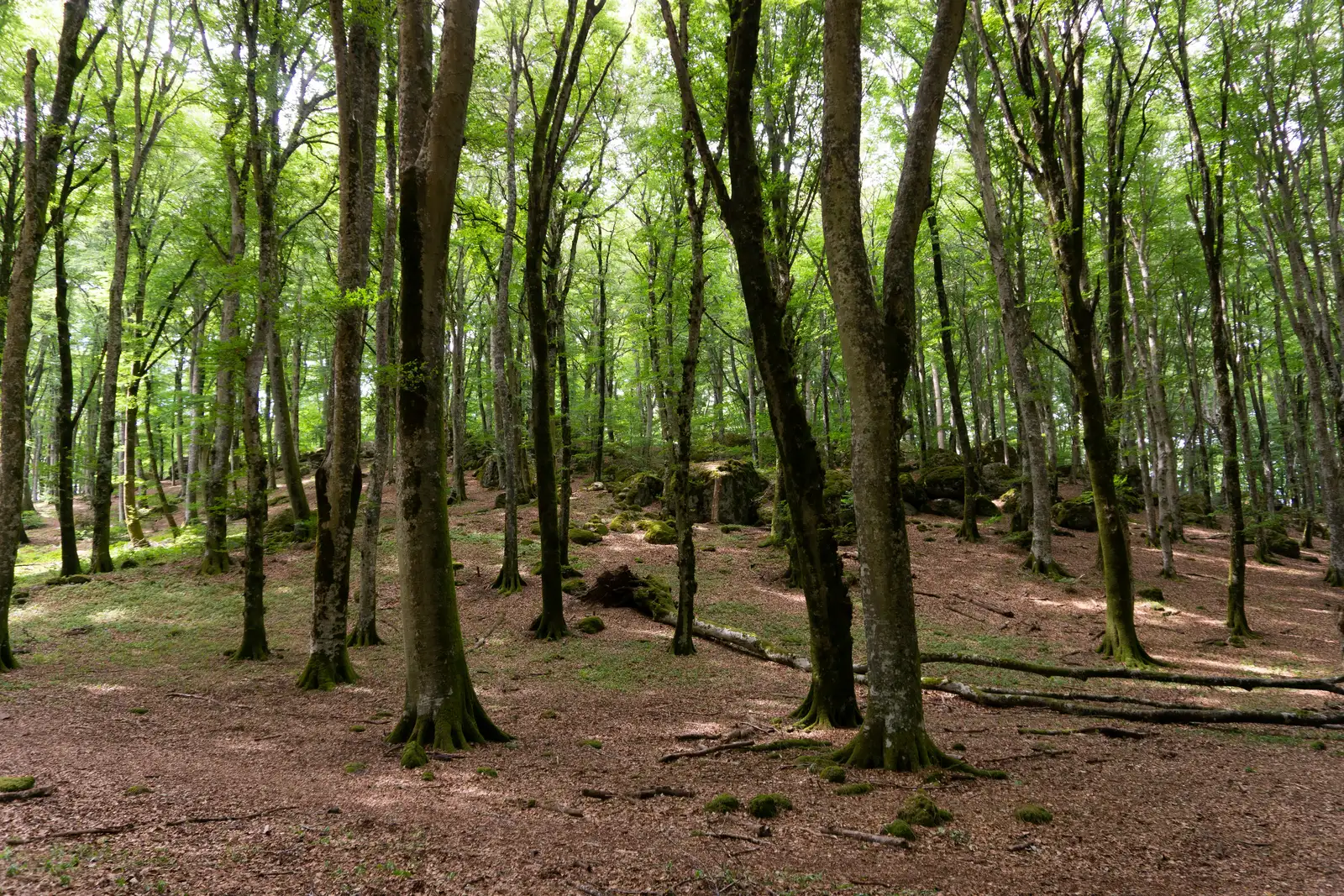

The first cold morning in Soriano nel Cimino smells like woodsmoke and wet leaves. Mist sits low over Lago di Vico until about nine, and somewhere in the beech forest above town, someone is already roasting chestnuts over a wood-pit fire before the day's hikers even lace up. This is Monte Cimino in October: cool, damp, a little unpredictable, and one of the better times of year to be on its trails if you pack for it correctly.
Monte Cimino sits in northern Lazio, a volcanic cone rising to just over 1,000 meters above the town of Soriano and the city of Viterbo. It's not a famous mountain outside Italy. It doesn't need to be. What it has is an ancient beech forest, a network of trails that range from easy loops to genuine climbs, and a season, autumn, when the whole area turns into something closer to a color-shifting theater set than a hiking destination. Getting the most out of it means understanding which trail fits your day, and packing for weather that can change three times before lunch.
Key Takeaways
- Autumn on Monte Cimino means temperature swings of 15+ degrees Fahrenheit between morning fog and midday sun, so layering is more important than any single "right" jacket.
- Route choice should be driven by time available and transportation, not difficulty alone. The Faggeta summit route and the Lago di Vico circuit serve very different kinds of days.
- If you're combining hiking with Soriano's autumn chestnut festival season (first two weekends of October), plan trail time for mornings, since the town center gets busy by early afternoon.
- Daylight in late October in this part of Lazio starts fading noticeably by 5:30pm. Start earlier than you think you need to.
- DIY route planning works here if you're comfortable reading trail markers and don't mind occasional ambiguity. If that sounds like a headache, guided options exist and simplify things considerably.
Why Autumn, Specifically
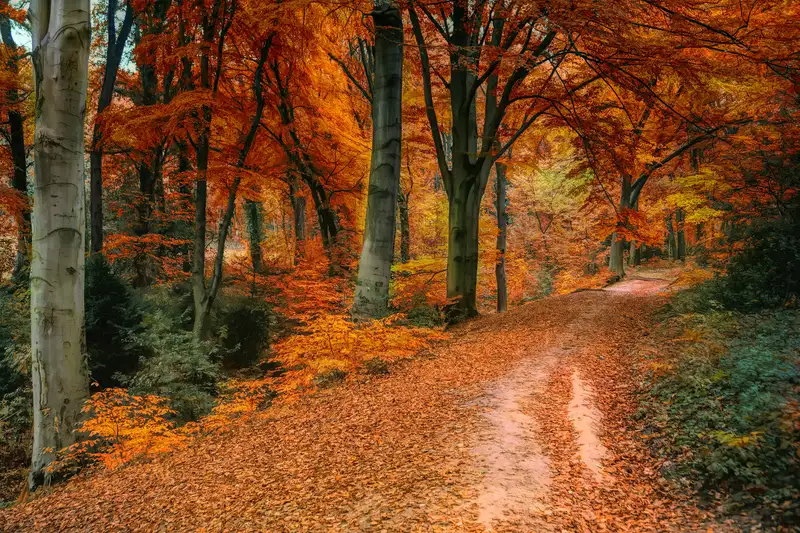
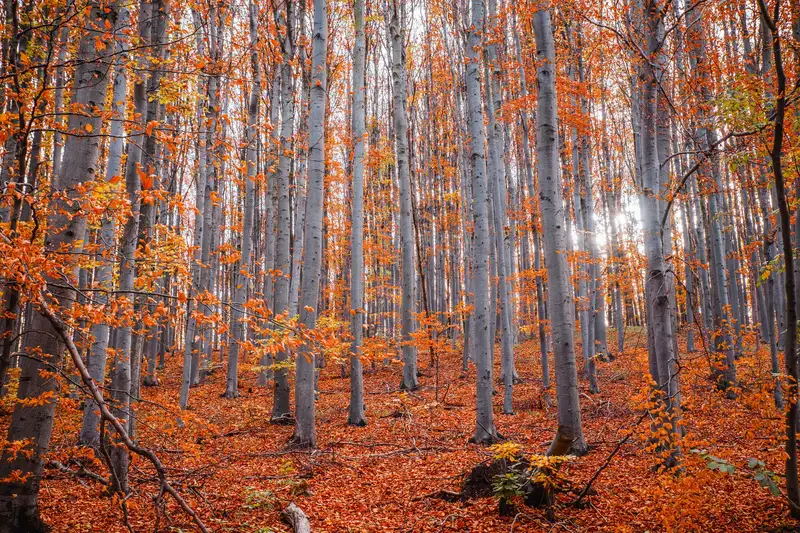
Summer in this part of Lazio is hot and somewhat flat. The beech canopy holds a lot of humidity, and by August the light is harsh enough that photographs of the forest floor come out overexposed. Autumn changes all of that. The ancient beech forest on Monte Cimino, known locally as the Faggeta, turns gold and copper through October, and UNESCO added this forest to its World Heritage list in 2017 as part of a wider designation covering ancient beech forests across Europe. That designation carries weight for a mountain most travelers have never heard of. The trees here are old, some estimated at several centuries, and autumn is when they look it.
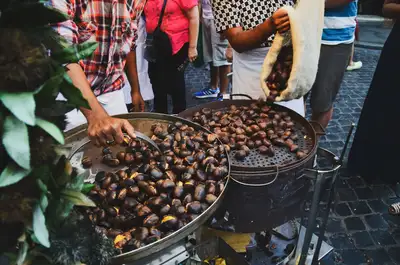
There's also the harvest. Chestnuts blanket the hillsides around Soriano nel Cimino starting in late September, and the town's Medieval Chestnut Festival runs during the first two weekends of October, a tradition that's been going for more than fifty years. Wine grapes come in around the same window. None of this is directly about hiking, but it shapes how you should plan a hiking day here: mornings on the mountain, afternoons in town, because by 1pm Soriano's narrow streets fill up with visitors drawn by the smell of roasting chestnuts and the four neighborhood contrade competing in costume and pageantry. It's a genuinely good problem to have, but it does mean the trails are quieter and more pleasant before noon.
The Trails: What You're Choosing Between
There isn't one "Monte Cimino trail." There are several, and they don't serve the same purpose. Some people want a two-hour loop with a coffee at the end. Others want to stand at the summit tower and feel like they earned the view over Lago di Vico and, on a clear day, out toward the Tyrrhenian coast. Below is how I'd break down the main options.
| Route | Distance | Elevation Gain | Difficulty | Time Needed | Best For |
|---|---|---|---|---|---|
| Soriano nel Cimino to Summit (via Faggeta) | ~7-8 km round trip | ~500m | Moderate | 3-4 hours | Beech forest color, summit views, reasonably fit hikers |
| Lago di Vico Nature Reserve Circuit | ~10-12 km loop | Minimal (~50m) | Easy | 3-3.5 hours | Families, birdwatchers, flat terrain, lake views |
| San Martino al Cimino Approach | ~6 km one way | ~450m | Moderate | 2.5-3 hours | Travelers without a car, bus access from Viterbo |
| Short Faggeta Loop (partial forest, no summit) | ~3-4 km loop | ~150m | Easy | 1.5-2 hours | Limited time, mobility concerns, quick forest immersion |
A few notes on how to read this table, because difficulty ratings on Italian trail signage can be generous compared to what American or British hikers expect. "Moderate" here usually means uneven ground, some root systems to step over, and stretches where the path narrows enough that you'll want hiking shoes, not sneakers. Nothing on Monte Cimino requires technical gear or ropes. But "easy" doesn't mean flat pavement either.
If you have half a day and no car, consider the San Martino al Cimino approach. It connects to bus service from Viterbo, which matters if you're not renting a vehicle for this leg of an Italy trip. If you have a full day and want the postcard version of the mountain, the Soriano-to-summit route through the Faggeta is the one to prioritize, especially in the first three weeks of October when the beech leaves are turning but haven't dropped yet. If you're traveling with kids or anyone who tires on inclines, the Lago di Vico circuit removes the climbing problem entirely while still delivering a pretty morning outdoors.
Reading the Weather Before You Read the Map
Here's something route descriptions rarely mention: Monte Cimino generates its own microclimate, and autumn is when it's most obvious. Fog collects in the lower elevations around Lago di Vico most mornings through October, sometimes not clearing until 10 or 10:30. Meanwhile the summit, once you're above the fog line, can be sitting in full sun with a completely different temperature. I've stood at the base of the Faggeta trail in a jacket, sweated through a layer by the time I reached the ridge, then needed that jacket back on within twenty minutes at the top once wind picked up.
This isn't unique to Monte Cimino, but it's more pronounced here than in flatter parts of Lazio because of the elevation change happening over a relatively short distance. The practical upshot: don't trust the temperature reading from your hotel window in Viterbo. Check conditions specific to elevation if you can, and build in the assumption that you'll be adding and removing layers all day.
Packing Logic by Scenario
Rather than a generic packing list (you can find those anywhere), here's how I'd think through it based on what kind of autumn day you're walking into.
| Condition | What to Prioritize | What to Skip |
|---|---|---|
| Foggy morning start, clearing by midday | Waterproof shell (not water-resistant), moisture-wicking base layer | Heavy insulated jacket; you'll overheat once sun breaks through |
| Steady rain forecast | Full waterproof layer, waterproof boots, dry bag for phone/camera | The Faggeta summit route entirely: trail gets slick on descent |
| Clear, cold morning (below 50°F/10°C) | Insulating mid-layer, gloves, hat for summit wind | Cotton anything; it holds moisture and won't dry |
| Warm, sunny afternoon after festival visit | Light layers, sun protection despite the season | Overpacking layers you won't need until sunset |
Footwear deserves its own mention. The forest floor holds moisture well into the day even after fog clears, and chestnut husks (spiky, quite uncomfortable underfoot) litter the ground through much of October. Trail shoes with real tread matter more here than they would on, say, a paved Tuscan hill town walk. I'd rank hiking boots above trail runners if you're doing the summit route, and either works fine for the Lago di Vico circuit.
One more practical point: bring more water than you think you need, even in cool weather. The climb through the Faggeta is shaded and doesn't feel strenuous in the way a sunny, exposed trail does, which means people underestimate how much they're sweating until they're thirsty at the summit with an empty bottle.
Timing the Day Around Light and Crowds
Daylight in late October in this part of Lazio drops off faster than most travelers expect, especially anyone visiting from farther north where autumn evenings stretch longer. By the last week of October, meaningful light is gone by around 5:30pm. If you're planning the full summit route, starting from Soriano by 9am gives you a comfortable margin. Starting at noon does not, particularly if you want time to linger at the top, which you will, because the view over Lago di Vico's crater lake and the Cimini hills earns a few extra minutes.
Crowds follow a predictable pattern during festival weeks. Mornings on the mountain are quiet, sometimes eerily so, aside from other hikers and the occasional forager collecting chestnuts (a fairly serious local pastime, not a tourist photo-op). By early afternoon, Soriano's town center fills as day-trippers arrive for the festival's food stalls and evening performances. That's not a complaint about the town, it's worth the visit, but it does mean the smartest sequence for an autumn day here is trail first, town second.
If you want to shift your itinerary north into Tuscany or Umbria afterward, the logic of that sequence matters too. There's a good case made in The Tuscan-Umbrian Corridor: A Cultural Progression for why moving from Renaissance grandeur down through rural landscape toward Umbria's quieter towns works better in that order than reversed. Monte Cimino and Alto Lazio sit south of that corridor, geographically and in spirit. If you're building a longer route through central Italy, this area functions well as either a starting point heading north or a slower final stretch heading south from Orvieto.
Getting There Without a Car
Not everyone rents a car for a trip through central Italy, and Monte Cimino is reachable without one, though it takes some planning. Trenitalia runs regional service into Viterbo, and from there local bus connections reach Soriano nel Cimino and San Martino al Cimino, both of which serve as trailheads for different routes on the mountain. It's worth checking current schedules directly through Trenitalia, since regional bus timetables in this part of Lazio shift seasonally and aren't always reliable months in advance.
For anyone routing this leg from Rome, Rome2Rio is a decent way to sanity-check total travel time between train and bus segments before committing to a car-free itinerary. I'd budget more transfer time than the schedule suggests. Regional connections in this corner of Lazio aren't as frequent as what you'd find between major cities, and missing one bus can mean a ninety-minute wait for the next.
Michelin's Green Guide covers the Monti Cimini area, including Lago di Vico and the beech forest, with enough detail to help decide which sections merit a stop if you're short on time. It's a useful cross-check against the route table above, particularly if you're deciding between the summit push and the easier lake circuit.
If You're Not Sure Which Route Fits Your Trip
Here's a simpler way to decide, stripped of the table above:
If you have one morning and no particular fitness goal, consider the short Faggeta loop. You'll get the forest, the color, a taste of the atmosphere, without the time commitment of the full summit climb.
If you're building your day around the festival and want the mountain as a complement rather than the main event, consider starting early on the Soriano-to-summit route and timing your descent to land back in town by early afternoon. This is the sequence I'd recommend to most people visiting during festival weeks. It uses the morning fog window productively instead of waiting it out.
If you're traveling with young kids, older relatives, or anyone managing a physical limitation, consider the Lago di Vico circuit without hesitation. The elevation gain on the summit routes isn't extreme, but the terrain underfoot (roots, loose stone in places, chestnut litter) can be tricky footing for someone unsteady. The lake circuit avoids most of that while still delivering scenery.
And if you don't have a car and staying flexible matters more than reaching the summit, consider the San Martino al Cimino approach specifically because of its bus access. It's a smaller version of the same experience, but it removes a logistics problem that otherwise eats into your hiking time.
Combining the Trail With the Table
It would be a little strange to write about autumn in Soriano nel Cimino and not mention the cooking side of the season, because the two are connected here. The chestnut harvest that colors the hillsides you're hiking through is the same harvest that shows up on plates during the festival weeks, and the wine grapes maturing along the terraces below the mountain are part of the same seasonal rhythm. Hands-on cooking classes using locally-sourced, often farm-grown ingredients are a feature of this area during October, not a marketing add-on. There's something to be said for spending a morning working up an appetite on the mountain and an afternoon learning what to do with the chestnuts you walked past.
For more on this, see Italy festival cooking tour.
I've spent enough time in this region to say that the DIY version of a trip here works fine if you're comfortable navigating regional transit, reading trail markers that occasionally contradict each other, and building in flexibility for weather. It's not a hard place to figure out on your own. But if the logistics side of that (transportation gaps, festival timing, figuring out which farmhouse actually does the cooking classes worth doing) sounds like more coordination than you want to handle while also planning the hike itself, that's a reasonable thing to hand off. Culture Discovery Vacations runs an eight-day week based in Soriano nel Cimino timed to this exact chestnut festival and harvest season, built around small groups living alongside locals rather than moving through on a bus schedule.

Comments (0)
No comments yet. Be the first!