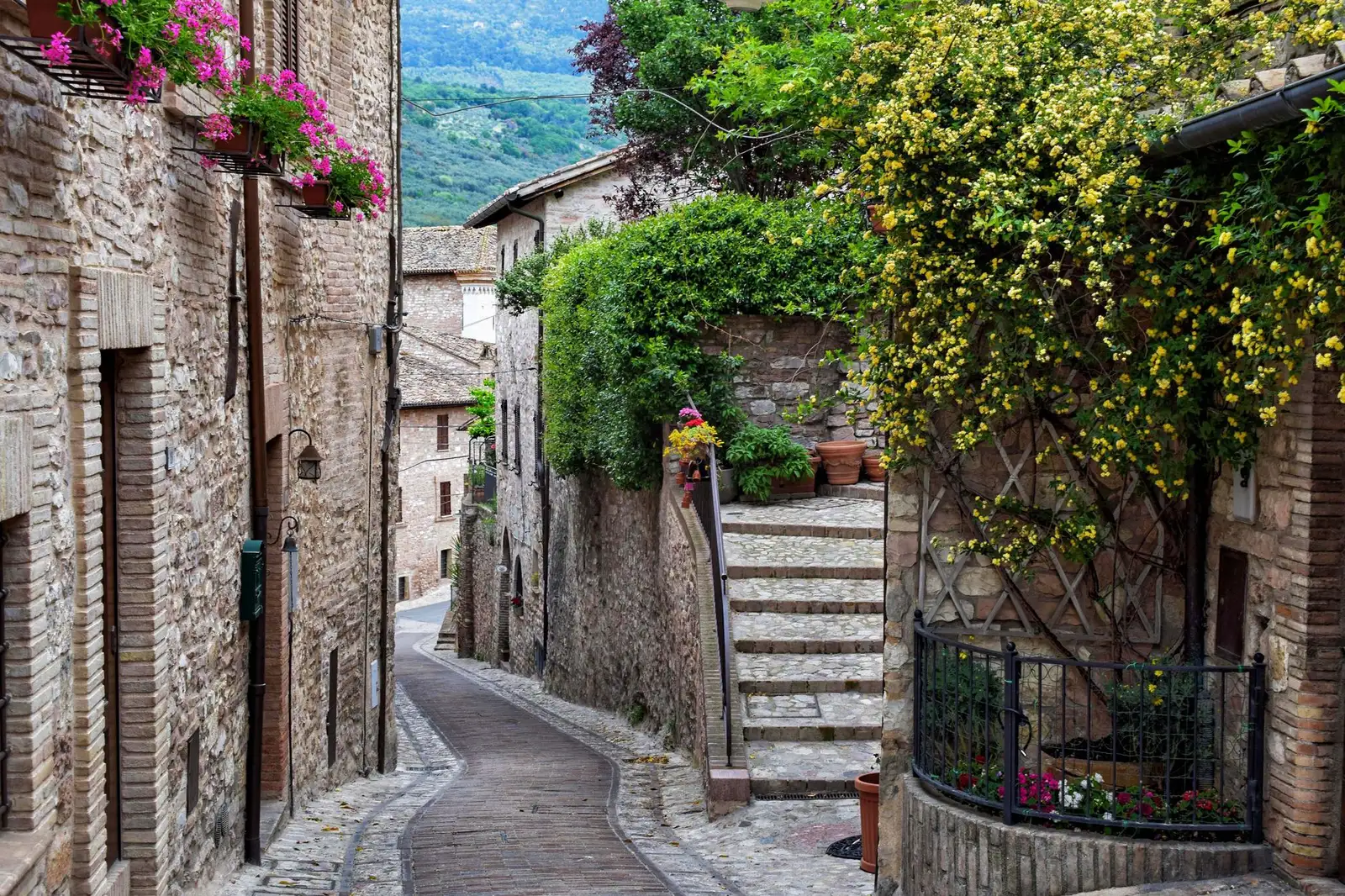

Slow travel starts with subtraction
Most trip plans grow by addition. A friend says you can't miss a certain town. A blog lists ten places in a region. A map shows how close two cities look. Each one gets a night or two, and by the time the plan is done, the trip has eight stops in fourteen days.
Slow travel runs the other way. You start with the days you have and take things out until the trip has room to breathe. Nobody sets a limit on how many places you can see. You're simply choosing to spend more of your time being somewhere and less of it getting there.
That sounds easy. It isn't, because every stop you drop feels like a loss. This guide is about making those cuts with a clear head, starting with what a move really costs. It doesn't assume slow is always better. For some trips, it isn't. The aim is to show you what you trade either way.
The real cost of a travel day
The first thing to see clearly is what a move costs. On paper, a two-hour train ride between two towns looks like two hours. In practice it is most of a day.
Walk through it. You pack in the morning and check out by the hotel's deadline. You get to the station early, because missing the train costs more than waiting. The ride itself is two hours. At the other end you find your way to the new place, which may mean a taxi, a bus or a walk with bags. Often you can't check in until the afternoon, so you leave the bags and wait. By the time you've unpacked and found your bearings, it's late in the day. You've seen a train window and two stations.
Driving is similar. The time on the road is only part of it. There's loading the car, finding parking at the other end, and the first hour of figuring out a new town.
A fair rule of thumb is that every move costs about half a day of real time. Some cost more, like a move with a flight or a long drive. A few cost less, like a short train hop where the hotels are near the stations. But half a day is a sensible place to start, and it makes the math clear.
Pace math: what you really get
Here is a simple way to see how a plan will feel. Start with your days on the ground, which is your number of nights plus one. Subtract the arrival day and the departure day, since jet lag and airports eat most of both. Then subtract half a day for every move between bases. What's left is the number of days you can really use.
Try it on a 14-night trip. That's 15 days on the ground, or 13 once you take out the first and last.
| Plan | Bases | Moves between bases | Usable days, roughly |
|---|---|---|---|
| Seven stops, two nights each | 7 | 6 | about 10 |
| Four stops, three or four nights each | 4 | 3 | about 11 and a half |
| Three stops, four or five nights each | 3 | 2 | about 12 |
| Two bases, a week each | 2 | 1 | about 12 and a half |
The numbers look close. The gap is about two and a half days between the fastest plan and the slowest. That's real, but it isn't the biggest difference.
The biggest difference is how the usable days are spread out. With seven stops, nearly every place gets one full day, wedged between an arrival and a departure. You never get a second morning anywhere. With two bases, each place gets several full days in a row. You can pick a day to rest. You can go back to a café you liked. You can wait out a rainy morning without losing the only day you had.
The math also shows something the map hides. Each stop added costs more than a night. It costs a move, and it takes a full day away from the stops on either side of it.
How many nights does a place need?
There's no fixed answer, but a few patterns hold up well.
One night is a stopover. You arrive, eat dinner, sleep and leave. It works when a place is on the way between two bases and you want to break up a long drive. It doesn't work as a way to see a place.
Two nights gives you one full day. That's enough for a city you want to sample, or a town with one main sight. It's the most common choice in fast plans, and it's often where the trip starts to feel rushed.
Three nights gives you two full days. This is the shortest stay where a place starts to feel like more than a stop. You get one day for the main sights and one for wandering, a day trip or rest.
Four to seven nights turns a place into a base. You unpack fully. You learn the way to the bakery and the bus stop. By the third or fourth morning, the people at the bar may know your order. A week lets you use the place as a home for day trips, and still have days with nothing planned.
A useful default for a slow trip is three nights as the floor and five to seven as the goal for your main bases. Use one or two nights only for stopovers you've chosen on purpose.
One base or several?
This is the biggest single choice in a slow trip. Each option has real tradeoffs.
One base for the whole trip
You unpack once. Every day starts from the same bed. You can take day trips out and come back each night. The place you stay becomes familiar, and that familiarity is a large part of what slow travel offers.
The tradeoff is range. You can only reach what's within a reasonable day trip. A good limit for most people is about an hour each way, maybe a little more for a special day. Beyond that, the day trip turns into a long day in a car or on a train, and you start to lose the point of staying put.
One base works best for trips of a week or so, for regions with a lot packed close together, and for people who care more about depth than variety. It also suits families and groups, for whom every move is harder.
Two or three bases
This is the most common slow plan for trips of ten days to three weeks. Each base covers a different region or a different kind of place: a city and a stretch of countryside, say, or the coast and the hills. You get variety without the churn.
The key is to choose bases that are far enough apart to feel different but close enough that the move between them is easy. A move of two to three hours by train or car is a good target. Longer moves eat more of the day, and some of the calm you built up.
Many short stops
Fast plans have their place. If you want a first look at a country and plan to come back, a quick tour of several cities can be the right call. The trick is to know you're making that choice, rather than drifting into it.
Choosing where to put a base
A base is a different thing from a sight. The best town to visit for a day isn't always the best town to live in for a week. When you pick a base, look for a few things.
Daily life within walking distance. A grocery store, a bakery, a bar for morning coffee, a place to eat dinner. If every meal needs a car, the base will feel more like a hotel than a home.
A way to get around. A train station or a regular bus line, if you won't have a car. Free or easy parking, if you will. Many historic town centers limit traffic, so check before you book a place inside the walls.
A size that fits. A big city as a base gives you endless choice and noise. A small village gives you quiet and a short list of options. A small town of a few thousand people often sits in between.
Things to do that don't need a car. A walk out of town, a market day, a church, a view. Something for the slow mornings.
For a closer look at how to weigh location against cost and comfort, the accommodation framework on this site lays out the tradeoffs in more detail.
Shaping the days once you arrive
Where you sleep is half of it. The other half is how full each day is. You can stay a week in one place and still run yourself ragged.
A simple approach is one anchor per day. The anchor is the one thing you've planned: a museum, a hike, a market, a winery, a day trip. Everything else is open. If the anchor is in the morning, the afternoon is free. If you have a big day trip, the next day is light.
It also helps to plan for empty days. On a week in one base, leave at least one day with nothing on it. It may become a rest day. It may turn into the best day of the trip, because it's the day you were free to follow something you found.
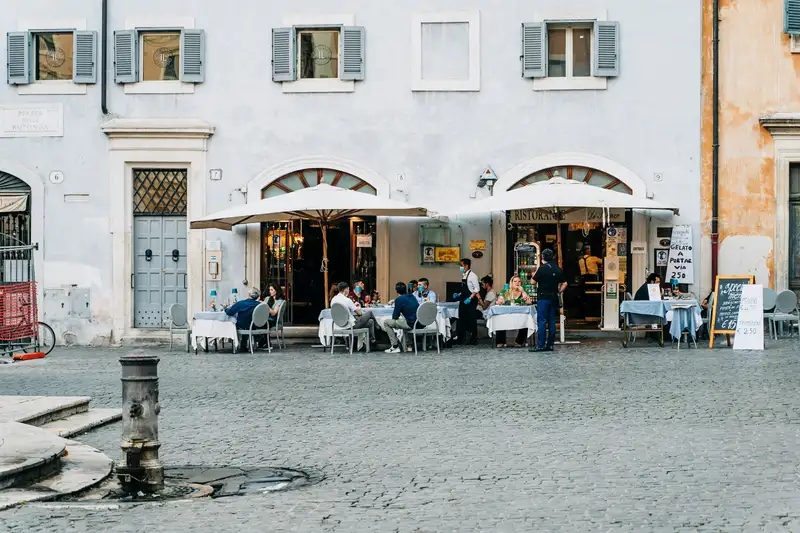
Leave room for the rhythms of the place. In many parts of Southern Europe, shops close for a few hours in the early afternoon and the evening starts late. The early evening stroll is part of daily life in many Italian towns, and the evening passeggiata in Soriano nel Cimino is a good picture of what that looks like up close. A slow plan works with these rhythms instead of fighting them.
What slow travel costs, and what it saves
Slow travel is often described as cheaper. Sometimes it is. Sometimes it isn't. It depends on how you do it.
Where it can save money: fewer trains, fewer taxis, fewer transfers. Fewer nights in the busy center of a big city, where rooms cost the most. Some rentals offer a lower rate for a week or more. Having a kitchen means you can cook some meals with what you bought at the market.
Where it can cost more: some holiday rentals in Europe have minimum stays, or run on a set changeover day, often Saturday in busy months. That can force your dates. A rental car for a country base is another cost, and so is the fuel for day trips. And if you choose a base that's lovely but remote, you may spend more on getting around.
The bigger saving is in energy. Fewer moves mean fewer chances for something to go wrong: a missed train, a lost booking, a long search for a parking space. That's harder to price, but most people feel it by the end of the trip.
Very long stays
Some people take slow travel further and stay a month or more in one place. That brings its own set of questions, and one of them is legal. Many visitors to Europe's Schengen area, including travelers from the United States, can stay for up to 90 days in any 180-day period without a visa. That limit covers the whole Schengen area together, not each country one at a time. If you're planning a long stay, check the rules for your own passport with an official source before you book.
Longer stays also change how you plan. Monthly rentals work differently from nightly hotels. You may want a place with a real kitchen and a washing machine. You may want to plan a short trip away in the middle, just to break the routine.
Which plan fits which traveler
The first-time visitor. You want to see the famous places, but you don't want to sprint. Try two bases: a city with the sights you'd regret missing, then a stretch of countryside to slow down. Give each one at least four or five nights.
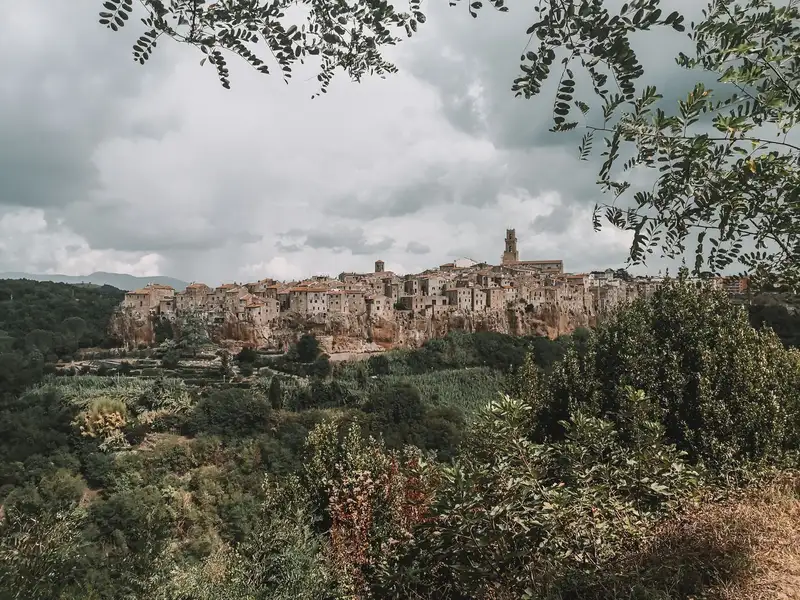
The return visitor. You've seen the big cities. Now you want to know one region well. One base for a week, or two bases in the same region, is often the right call. A route that moves through neighboring regions in a sensible order can work too. The Tuscan-Umbrian corridor is one example of how a sequence can carry a trip without forcing a new hotel every night.
The family or group. Every move is harder with more people and more bags. One base is often the kindest plan. Pick a place with space to spread out, and keep day trips short.
And if you would rather not build the bases yourself, some small group trips are planned this way from the start. Culture Discovery Vacations runs most of its Italy weeks from a single home base, so you unpack once. I'm one of its founders, so take that as one example, not the only one.
For a worked example of pace planning in another region, see how to pace an Andalusia itinerary without burning out, which applies the same thinking to a 10 to 14 day trip.
A short way to build the plan
If you want a method you can follow from start to finish, try this.
- Write down your number of nights.
- Decide how many bases you'll use. For a week, start with one. For two weeks, start with two. For three weeks, start with three.
- For each base, list the places you'd like to reach. Cross out any that are more than about an hour away, unless one is worth a long day.
- Give each base at least three nights, and your favorite base the most.
- Plan one anchor per day, and leave at least one empty day per base.
- Run the pace math. If the usable days feel thin, cut a base, not a day.
The last step is the one that matters most. When a plan feels tight, the instinct is to keep every stop and trim the time in each. That usually makes the trip worse. Cutting a whole stop gives the time back to every other place on the list.
The final decision: is a slow trip right for this trip?
Slow travel isn't the right answer for every trip. Some people love a fast trip. They like new beds, new streets and the feeling of covering ground. For them, a slow trip would feel like waiting. That's a fair way to travel, and it deserves to be planned well too.
Slow travel suits people who want to feel at home in a place, even briefly. It suits people who come back from fast trips more tired than when they left. It suits trips built around food, walking, family time or rest, rather than a list of sights.
If you're unsure, try a middle path. Plan one base for most of the trip, and allow one short, quick add-on at the end if you find you want more. After one slow trip, cutting stops the next time often hurts a lot less.
Who This Is (and Isn't) For
This guide is for people planning a trip of a week or longer who want fewer moves and more time in each place. It works for any country, though the examples lean toward Southern Europe, where small towns and good trains make slow travel easier.
It's less useful for very short trips of three or four days, where one base is the only sensible choice anyway. It also won't help much if the trip's purpose is to cover a long route, such as a road trip across a large country, where moving is the point.



Comments (0)
No comments yet. Be the first!